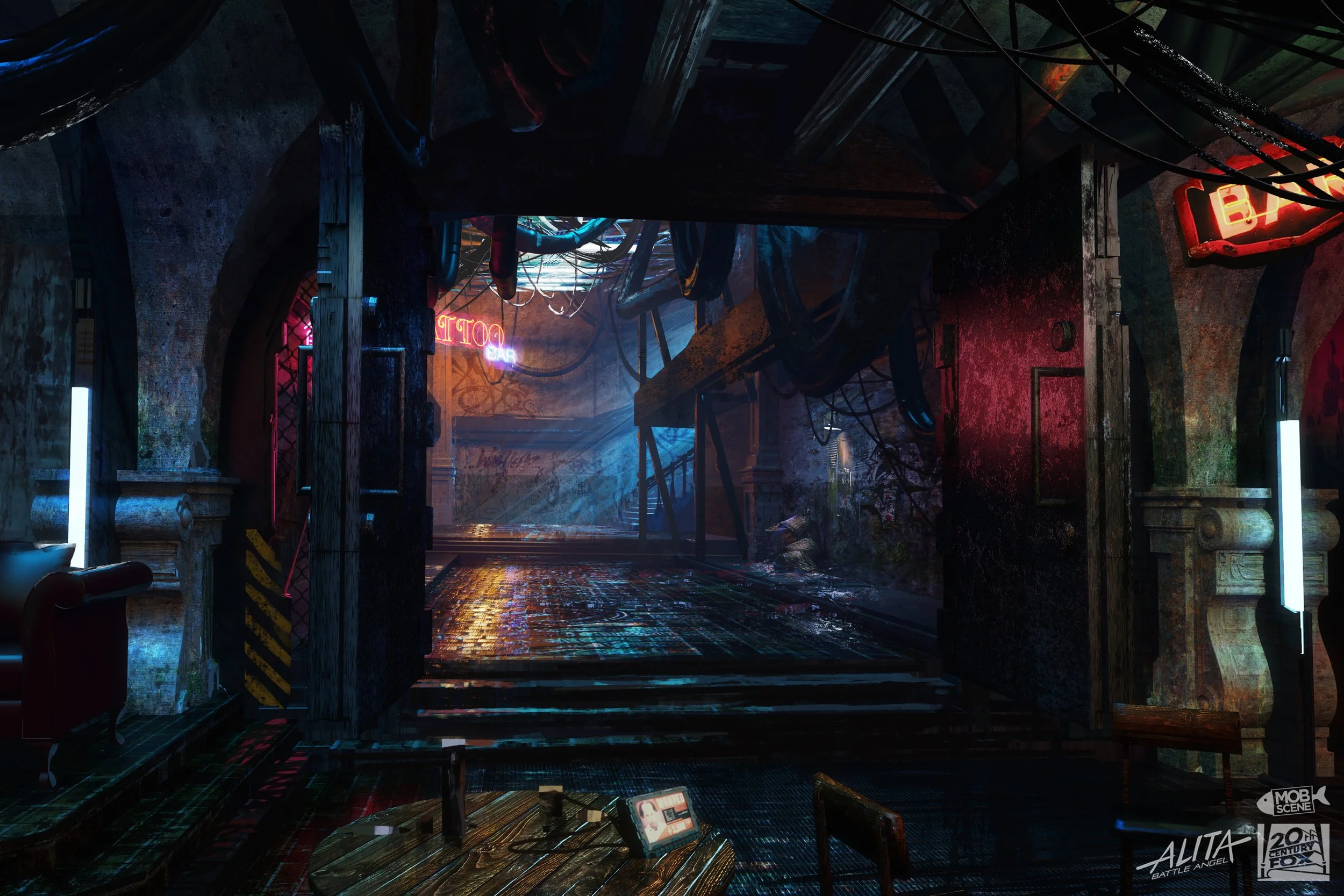
Bringing Iron City to Life: NUEN Studio’s Journey on Alita: Battle Angel
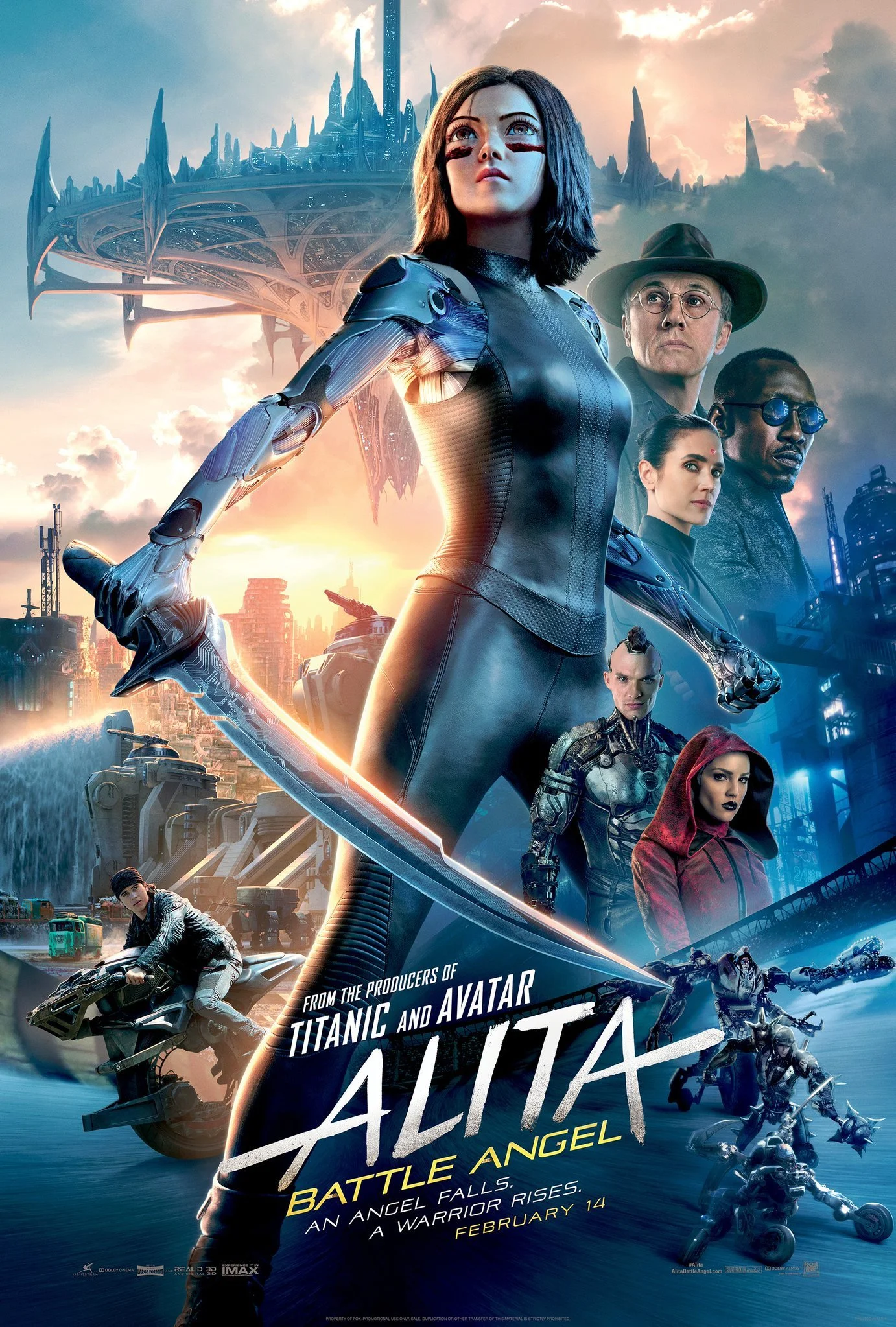
Official movie poster
“Some projects arrive with a brief. And then some projects arrive with a weight.”
For NUEN Studio, Alita: Battle Angel was the second kind.
On paper, the task was clear: create a series of background artworks for the motion-comic special features included in the film’s Blu-ray release. The scope was promotional material. The deliverables were background paintings. The timeline was tight. The process was familiar.
But emotionally, creatively, and professionally, this was never just “another promotional project.”
Because this was Alita.
What Is Alita: Battle Angel?
For audiences who are new to the name, Alita: Battle Angel is a 2019 cyberpunk sci-fi film directed by Robert Rodriguez, produced by James Cameron and Jon Landau, and based on Yukito Kishiro’s legendary manga Battle Angel Alita, originally known in Japan as Gunnm. The original manga was first published in Japan in 1990 and has long been recognized for its intense action, layered world-building, cyborg philosophy, and emotionally complex heroine.
At the center of the story is Alita, a cyborg girl found in a scrapyard with no memory of her past. Rebuilt by a cyber-doctor, she slowly discovers that beneath her fragile appearance is the instinct of a warrior. Her journey is not only about fighting enemies, but about identity, humanity, memory, survival, and what it means to still have a soul in a world where the body can be replaced piece by piece.
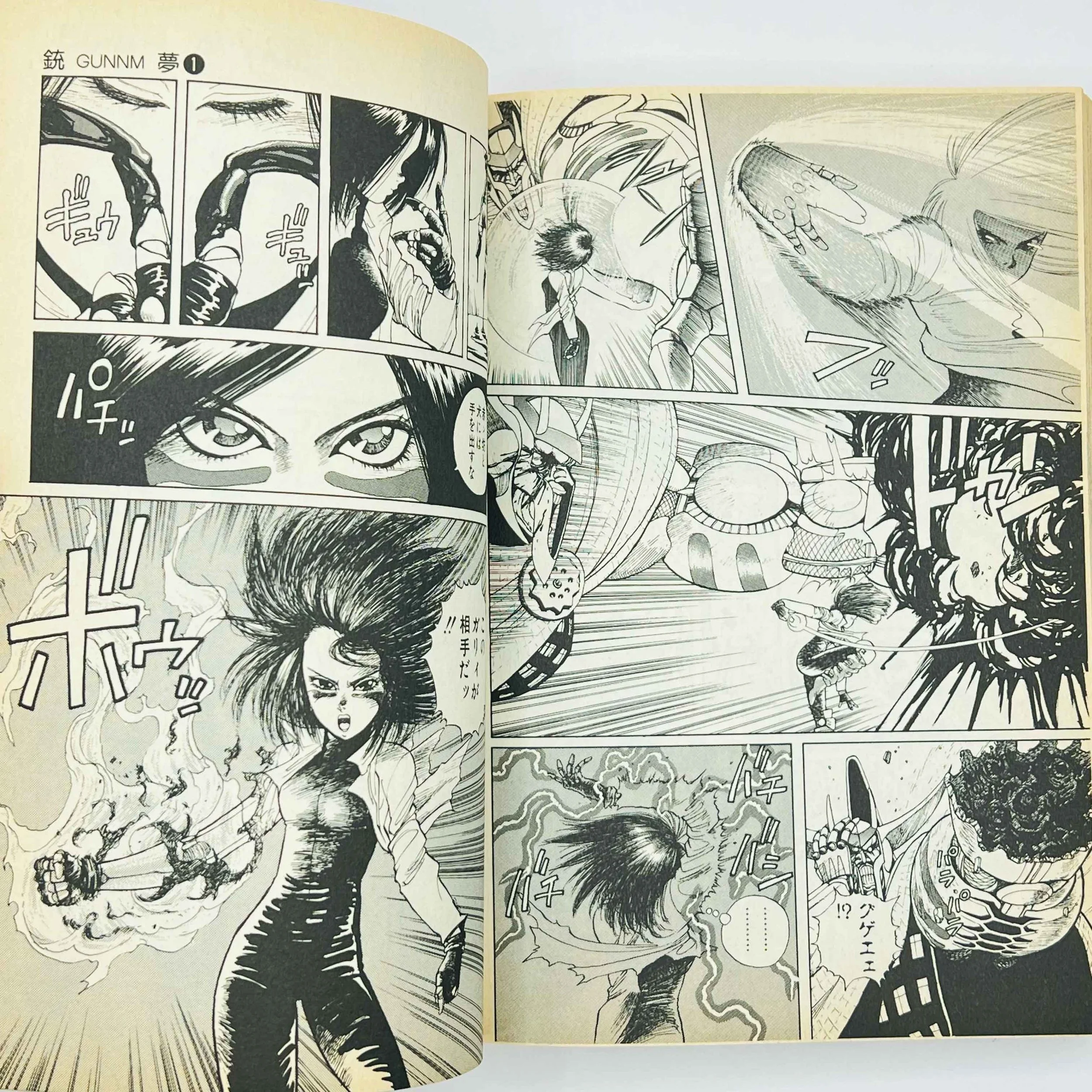
The Original Manga
That is why Alita became more than just a character to many fans.
She became an icon of cyberpunk storytelling: powerful but vulnerable, machine-like but deeply human, innocent but dangerous, lost but always moving forward.
For manga and anime fans, the live-action film was also a long-awaited project. James Cameron had been attached to the adaptation for years before Robert Rodriguez eventually directed the film, with the production benefiting from the kind of performance capture and visual effects advancements that made Alita possible on screen.
So when NUEN Studio was invited to contribute concept art to this world, as a fan ourselves, we understood something immediately:
Our part might be small in the scale of the whole film. But the world we were stepping into was not small at all.
1. The Brief: 11 Backgrounds, One Believable World
Before the Blu-ray release of Alita: Battle Angel, 20th Century Fox was developing additional content to help audiences go deeper into the world of the film. The goal was to create promotional and special-feature materials that connected the movie back to the original manga and anime roots, offering more context for longtime fans while also helping new audiences better understand the universe.
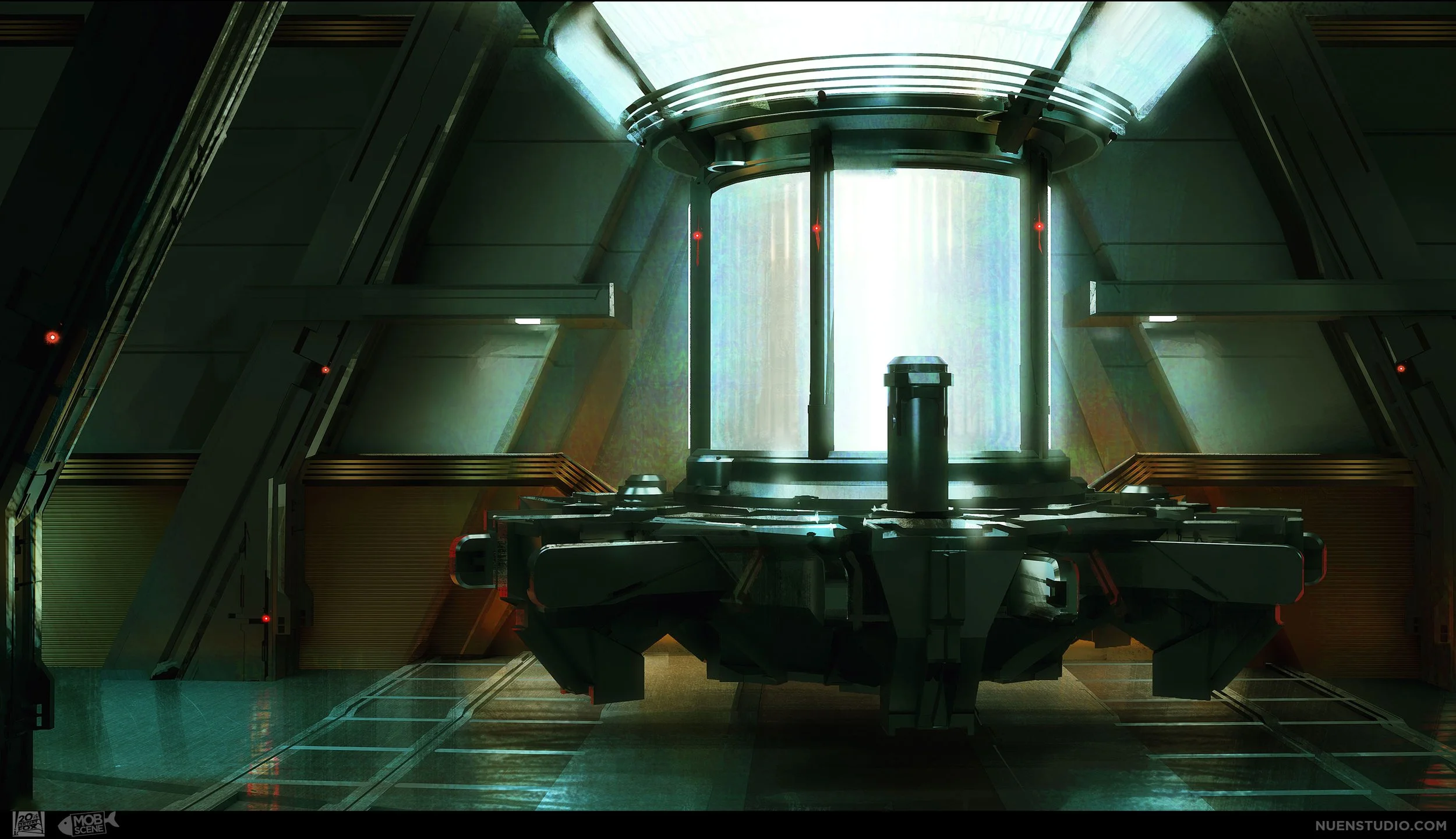
Through Mob Scene, NUEN Studio was brought into the project to create high-end background paintings for motion-comic style content. The scope was to produce 11 layered background artworks, depicting Iron City at night across multiple locations, including busy streets, a bar, a factory interior, the Motorball stadium, and panoramic cityscapes.
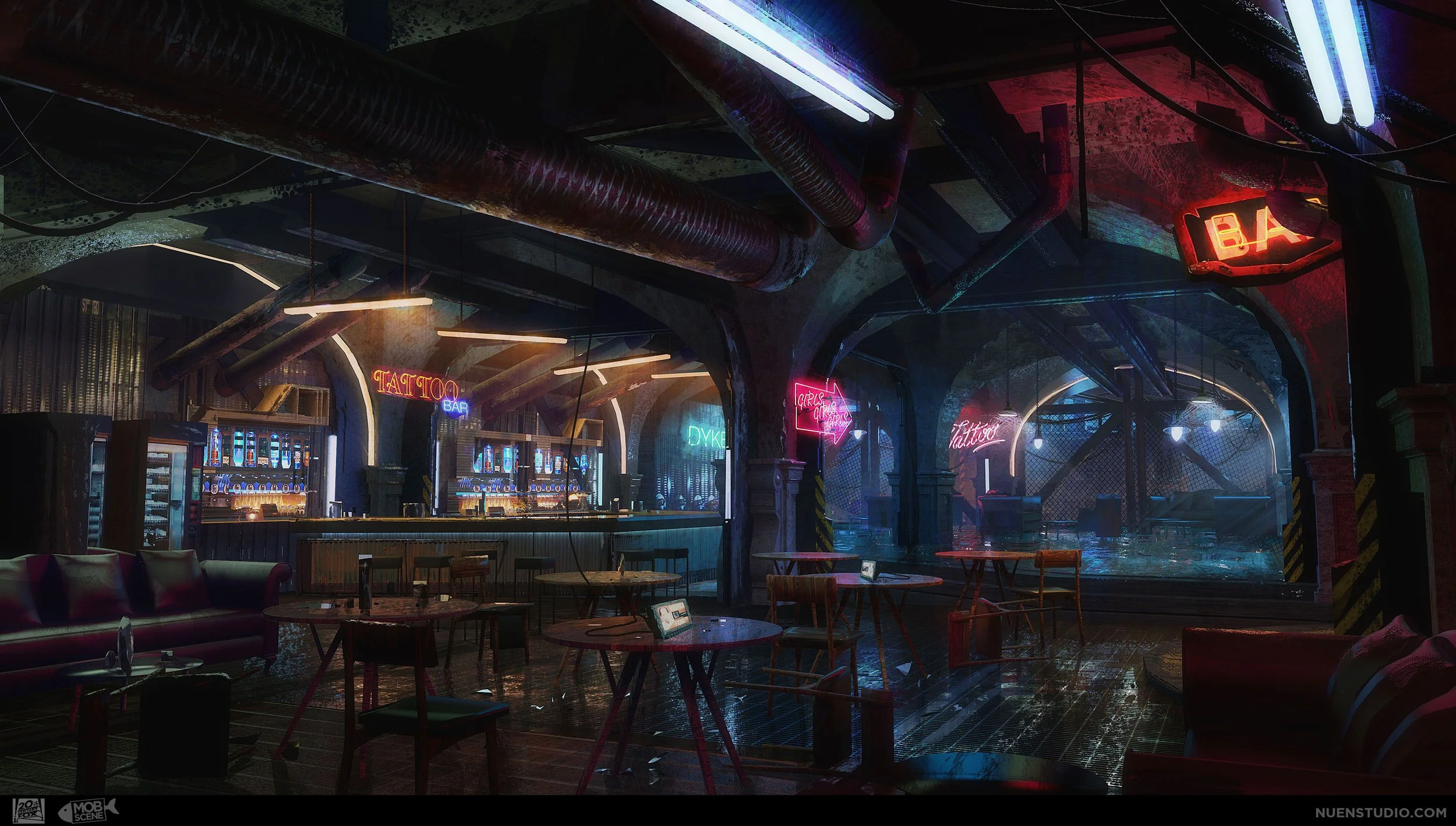
Again, on paper, these were background paintings for Blu-ray extras. But to us, they were part of the official world-building experience.
And that changed the mindset completely.
We never approached the work as “just promotional material.” In a project like this, even a background needs to hold the world together. Even a few seconds of screen time can shape how the audience feels about a place. Even if the artwork sits behind the story, it still has to carry atmosphere, history, density, and believability.
If anything, the fact that our role was small made us take it more seriously.
Because when you are one part of a much bigger machine, your responsibility is to make sure your part fits.
2. Designing Between Cyberpunk and Decay
Before we could paint anything, we first had to understand where we were.
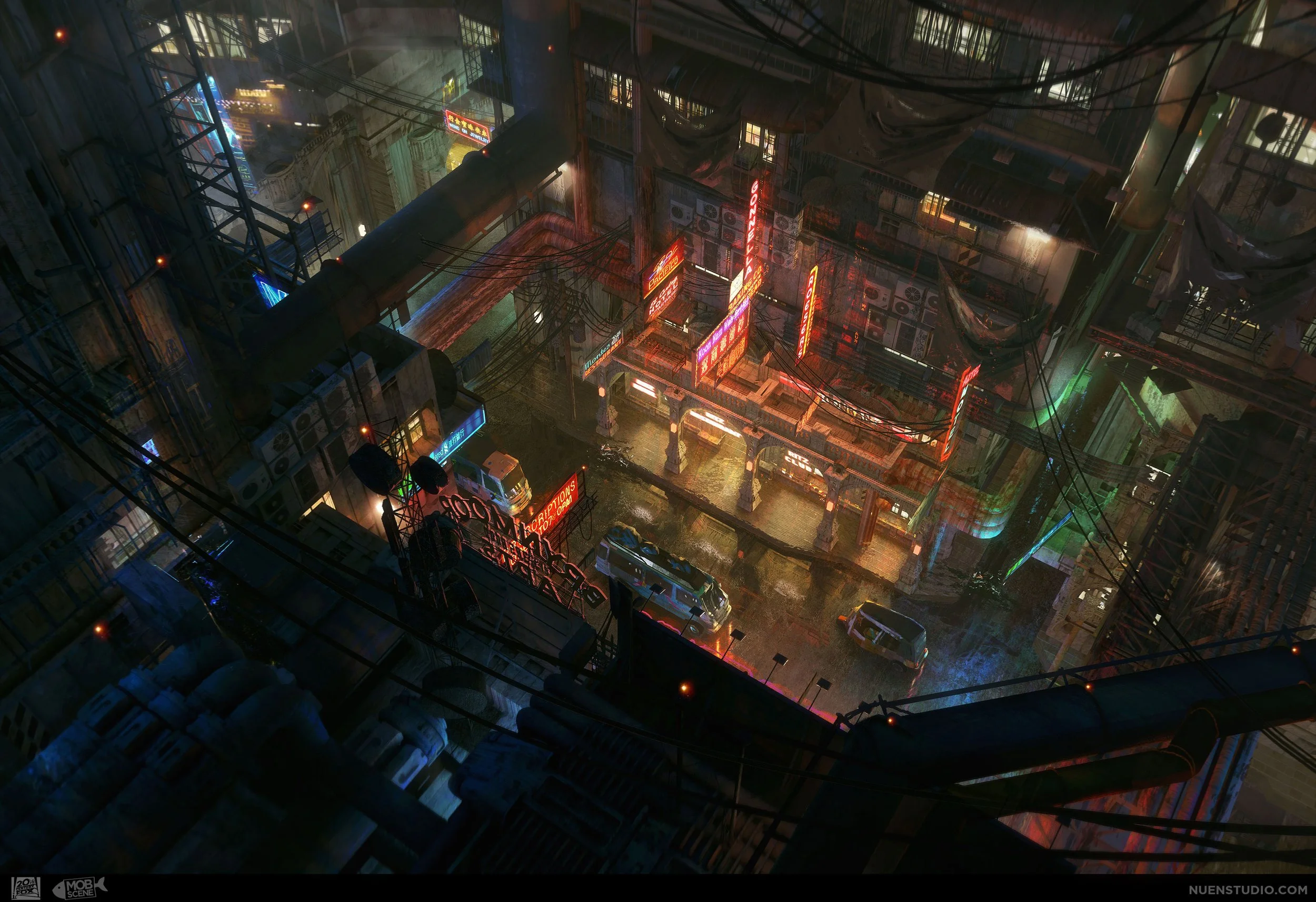
The world of Alita is built on contrast. It is futuristic, but broken. Technological, but dirty. Full of advanced cybernetics, but also full of poverty, violence, and survival instinct. It is not the clean, polished version of science fiction. It is a world made of metal, dust, rust, scars, cables, body parts, ambition, and memory.
The first emotional reaction was excitement.
The second was pressure.
There was a moment at the beginning where the team had to acknowledge the size of the thing we had just stepped into. Alita was not an unknown IP. It was a beloved manga. A long-awaited film. A James Cameron-associated project. A world with decades of visual imagination already living in the minds of fans.
As artists, that can be intimidating.
You are not starting from a blank page.
You are entering a world that people already care about.
The question was not: “How do we make this look cool?”
The question was: “How do we make this feel like it belongs?”
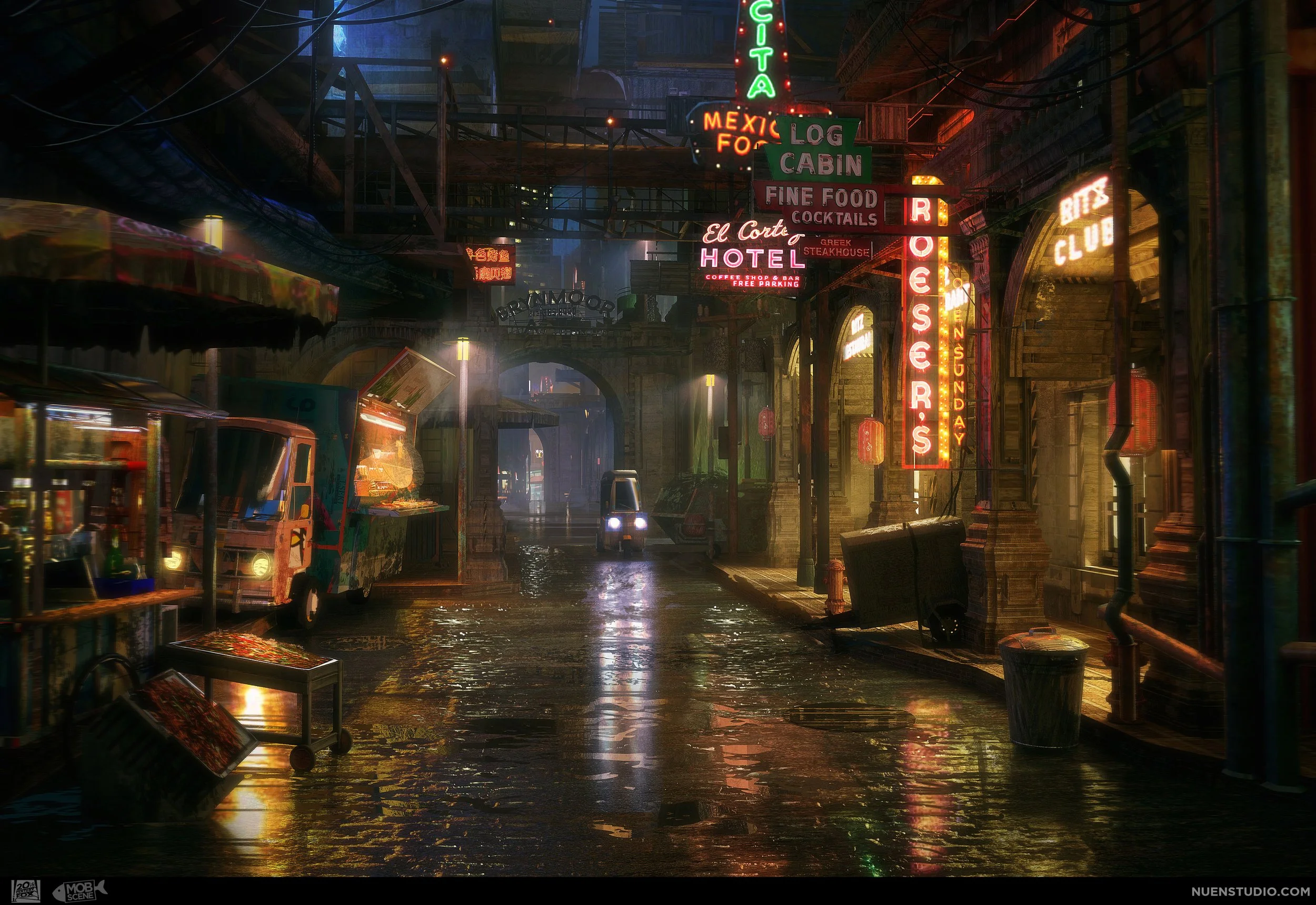
Iron City street view
For Iron City, the visual direction needed to balance two qualities that are not always easy to hold together: cyberpunk and antique.
The city needed advanced machinery, cybernetic culture, dense industrial structures, glowing signage, and a sense of future technology. But at the same time, it needed age, rust, humidity, street life, uneven construction, dirt, repair marks, and imperfection. NUEN Studio described this as a “cyberpunk-meets-antique” aesthetic, especially in the final paint-over stage, where lighting, color grading, street reflections, and material details became crucial.
The biggest production challenge was the limited access to the reference.
At that point, the film had not yet been widely released. We could not simply watch the full movie, pause every shot, and study the complete visual language of Iron City. Much of the research had to come from trailers, screenshots, released promotional materials, and whatever visual clues were available. NUEN Studio’s official project page also notes that the team relied heavily on trailer screenshots during production to stay true to the film’s vision while adding subtle touches inspired by Yukito Kishiro’s manga.
That meant the work became a kind of visual investigation.
We had to watch and rewatch.
Pause and zoom in.
Compare details.
Cross-check shapes.
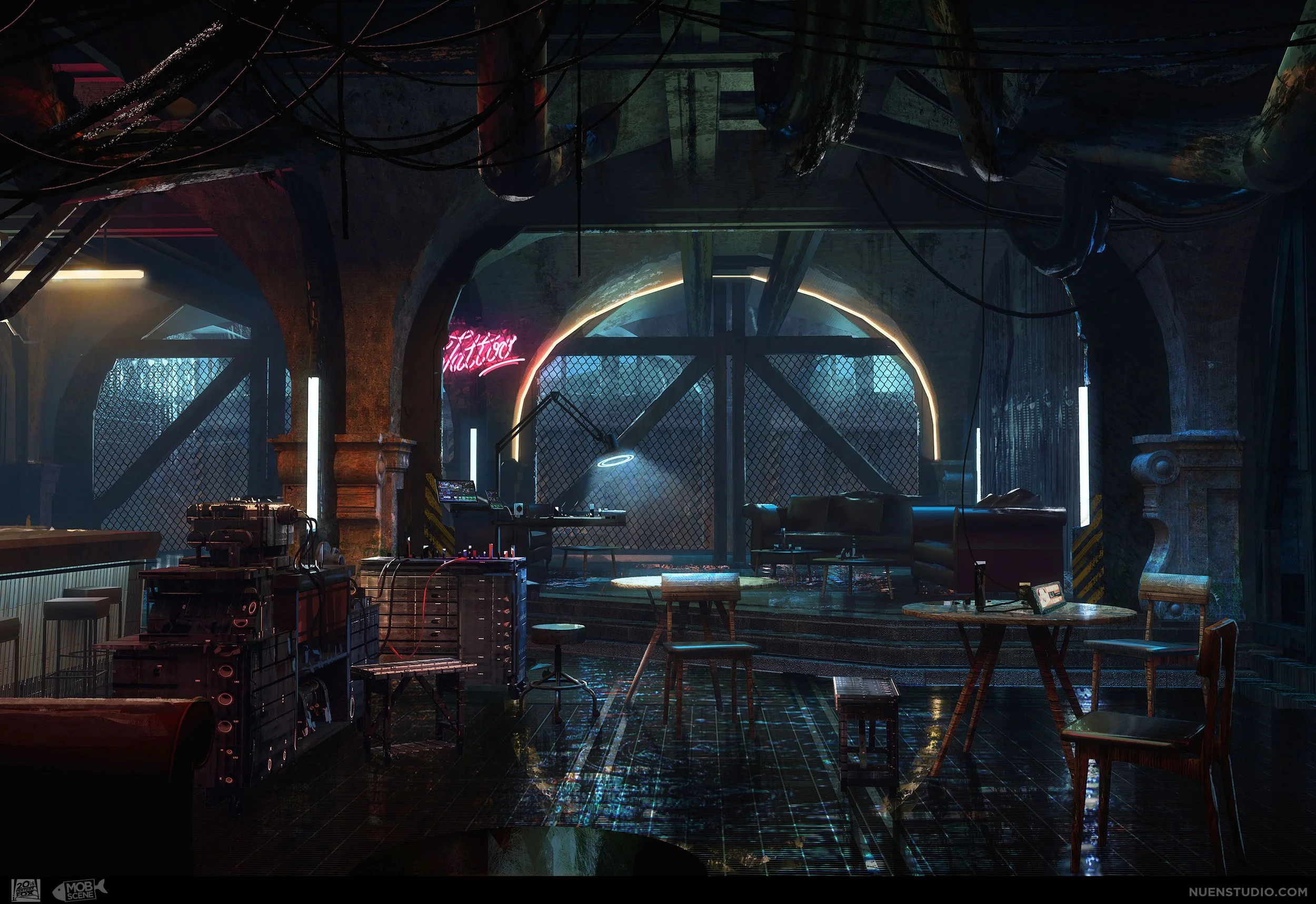
Read the logic of the city from fragments.
How dense should the street be?
How tall should the structures feel?
What kind of signage belongs there?
How much neon is enough before it becomes generic cyberpunk?
How old should the metal feel?
What kind of light still feels like Alita?
What would make Iron City feel alive, not just illustrated?
This was where the artist’s work became more than execution.
It became an interpretation.
We were not simply copying references. We were reverse-engineering the logic of the world from limited material, then rebuilding it into scenes that could feel believable, cinematic, and production-ready.
At first, it felt intimidating.
But the deeper we researched, the more the world started to reveal its own rules.
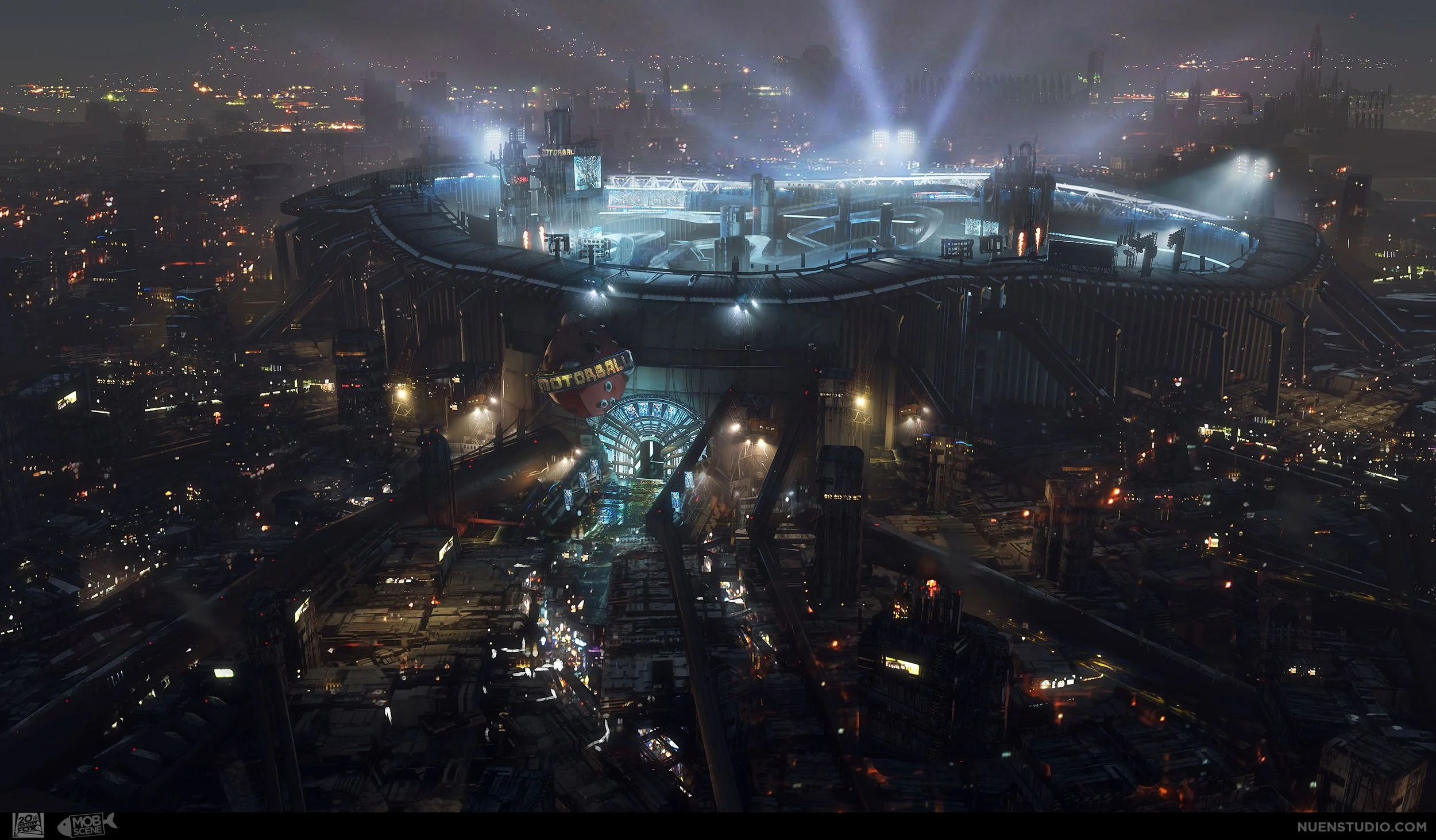
3. Composition, Blockout, Paint-over: Building Iron City Layer by Layer
The production followed NUEN Studio’s three-step workflow: sketch and composition approval, 3D blockout and iteration, then final illustration and optimization. Each background painting took around five days to develop, from the initial sketch to a fully illustrated, animation-ready artwork.
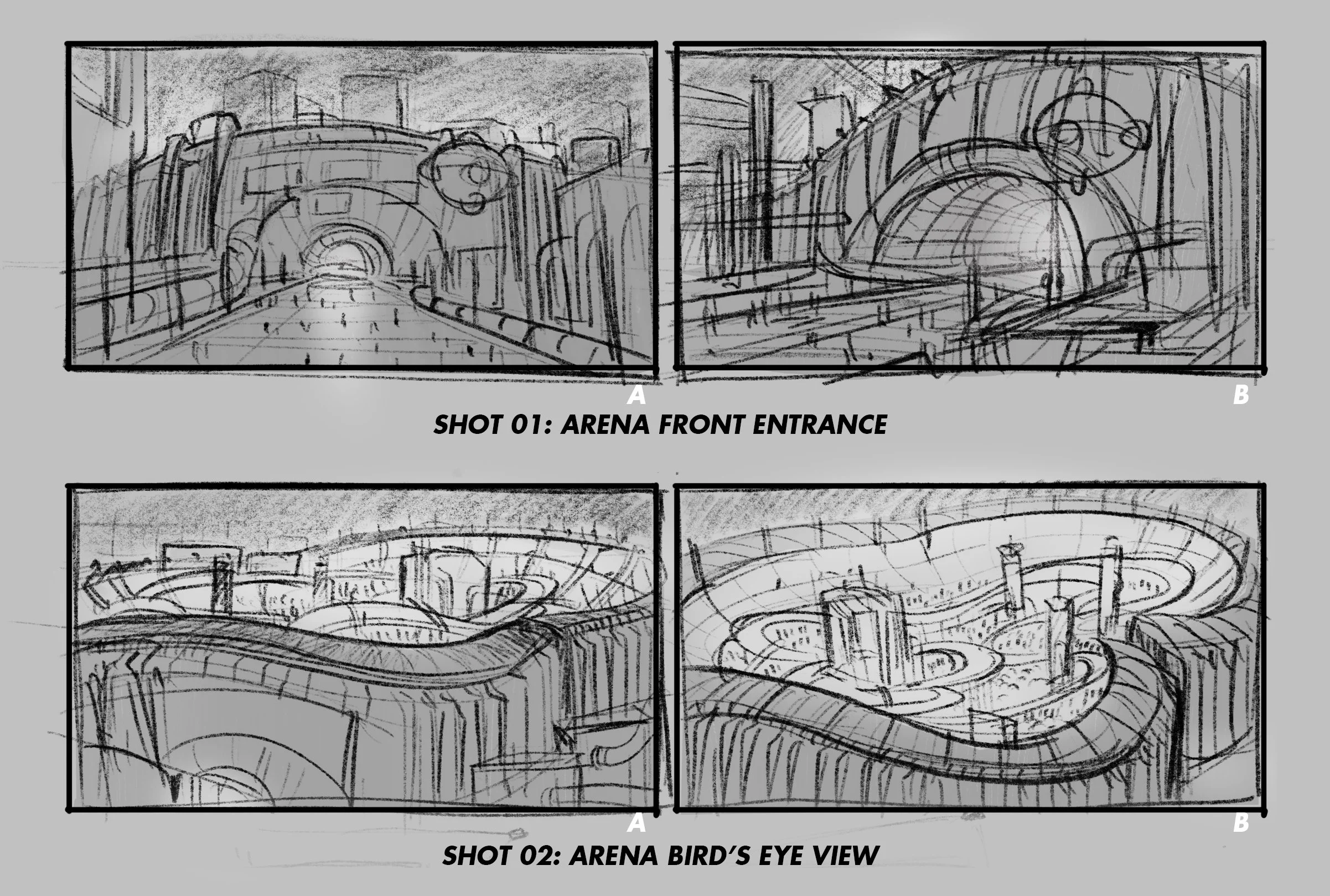
The first stage was Composition.
Before adding details, the team had to decide what each image needed to say. Was this a busy street full of movement? A quiet but tense industrial corner? A wide establishing shot? A space that should feel dangerous? A place that should feel lived-in?
In concept art, composition is not only about making an image look beautiful. It is about storytelling. It tells the viewer where to look, what to feel, and what kind of world they are entering.
Once the composition was approved, we moved into 3D blockout.
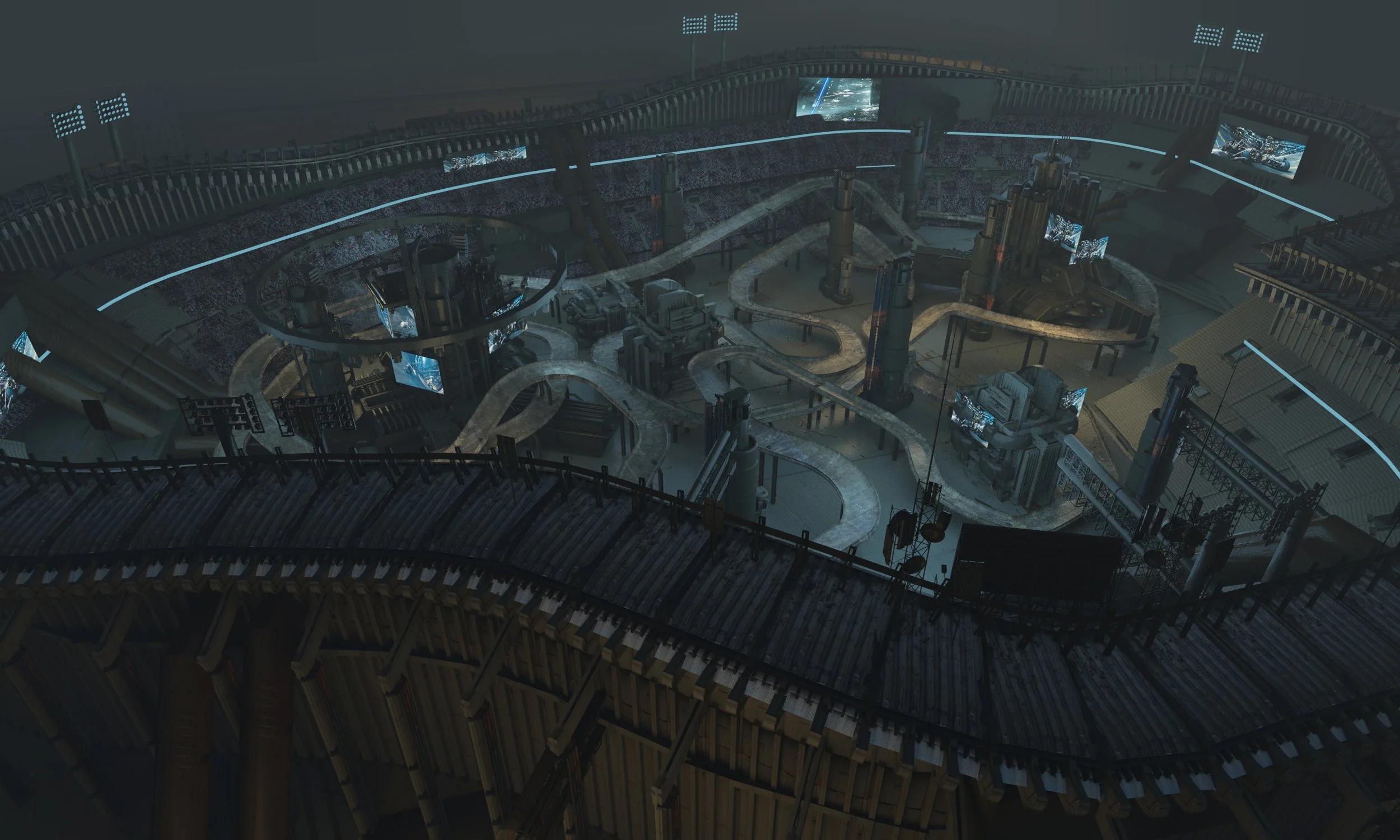
For a world like Iron City, this step was especially important. The city is not flat. It is layered with pipes, platforms, balconies, industrial structures, signs, cables, street objects, distant architecture, and background depth. 3D blockout helped us solve scale, perspective, camera angle, and spatial logic before moving into the final illustration.
Then came daily feedback and iteration.
This was where the project slowly began to align.
Every note helped sharpen our understanding of the world. Every revision brought the image closer to the film’s visual language. Every adjustment forced us to ask whether the scene still made sense within Iron City, not just as a standalone painting.
We kept cross-checking against released materials. If something felt too clean, we pushed it back toward age and wear. If something felt too futuristic, we grounded it with more industrial logic. If something felt too generic, we looked again at what made Alita distinct.
The final stage was paint-over in Photoshop.
This was where the image became cinematic.
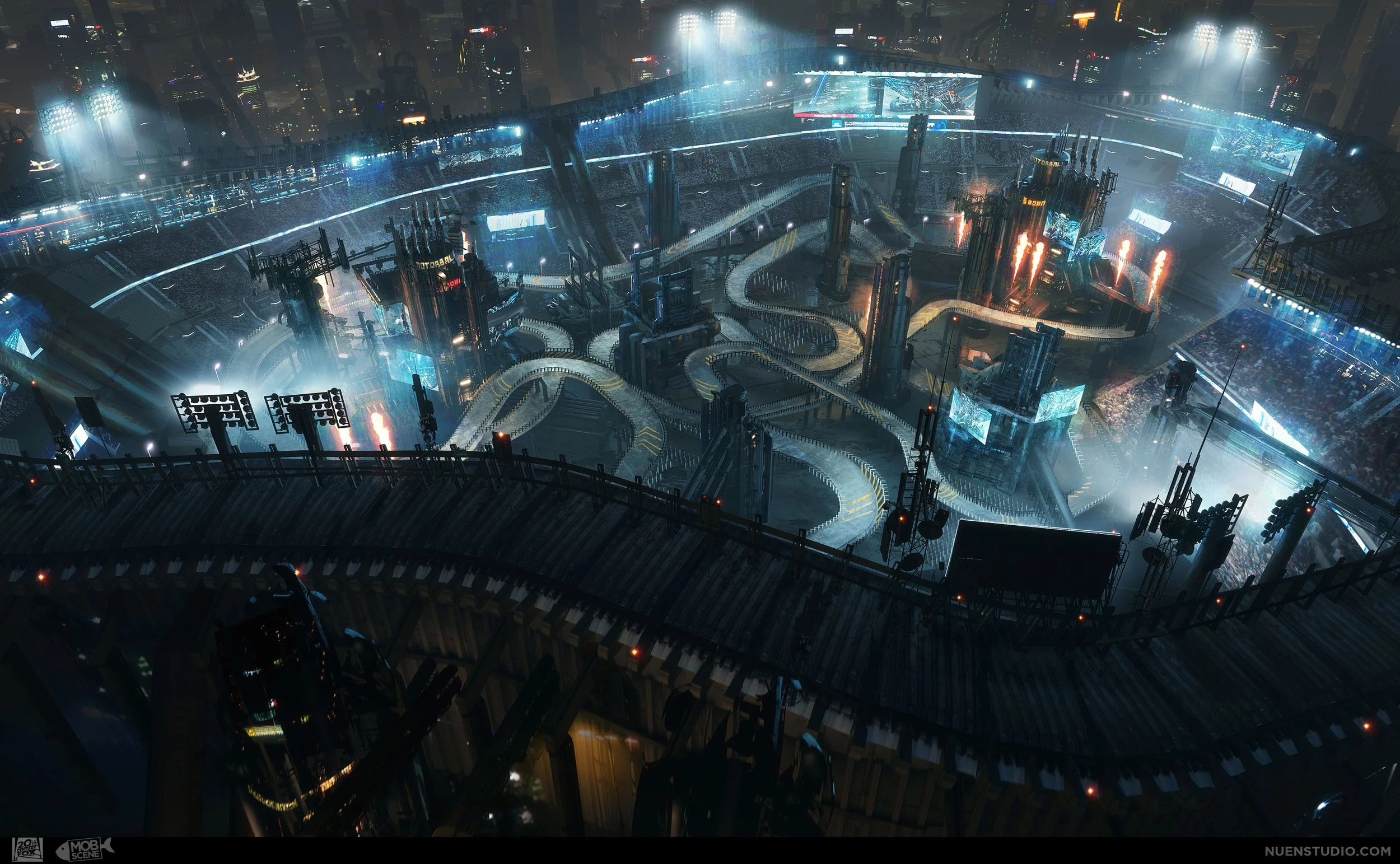
Lighting, color grading, street reflections, surface texture, atmospheric depth, and small environmental storytelling details — all of these elements were refined carefully to transform the 3D base into a polished background artwork ready for motion-comic animation.
And somewhere in that process, the fear changed.
At the beginning, we were thinking about the scale of the project: 20th Century Fox, Mob Scene, James Cameron, Robert Rodriguez, Alita, the manga legacy, the fans, and the expectations.
But during production, the only way forward was to focus on the work in front of us.
One composition.
One blockout.
One lighting pass.
One reflection.
One layer of atmosphere.
One more check against the reference.
That was how the pressure became manageable.
Not by treating the project as less important.
But by respecting the process enough to let it carry us through.
4. Delivering Backgrounds That Could Stand Inside the Film’s World
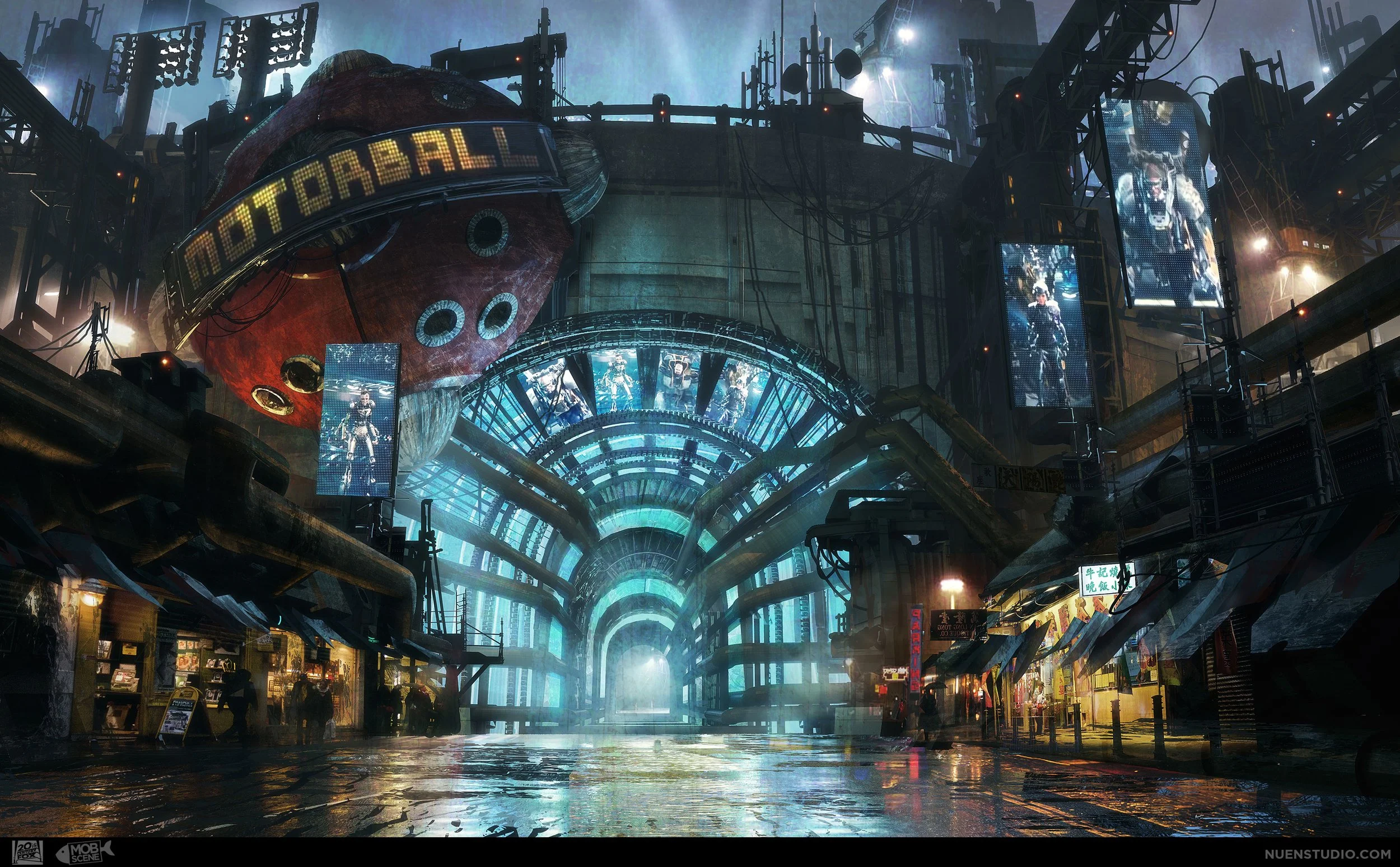
The final artworks were used as part of the motion-comic special features for the Blu-ray release of Alita: Battle Angel. These motion comics helped expand the film’s world and gave audiences additional story context beyond the main feature.
The Blu-ray release also performed strongly, topping home video sales charts for two consecutive weeks in August 2019, and by December 2019, the film had generated over $50 million in home video sales.
For NUEN Studio, however, the most meaningful result was not only seeing the work released officially.
It was knowing that the work was recognized by people inside the project.
That meant a lot.
Because behind every final background was a process full of uncertainty, research, interpretation, checking, rebuilding, and refining. We were working with limited reference materials, but the work still had to feel official. We were contributing to promotional content, but the quality still had to meet the standard of a global film project. We were only one piece of the larger production, but we still had to take ownership of that piece completely.
When the film and Blu-ray release reached audiences, it became a proud moment for the studio.
Not loud pride.
More like the quiet kind.
The kind where you look back and realize the team had stepped into something intimidating, stayed focused, trusted the process, and delivered.
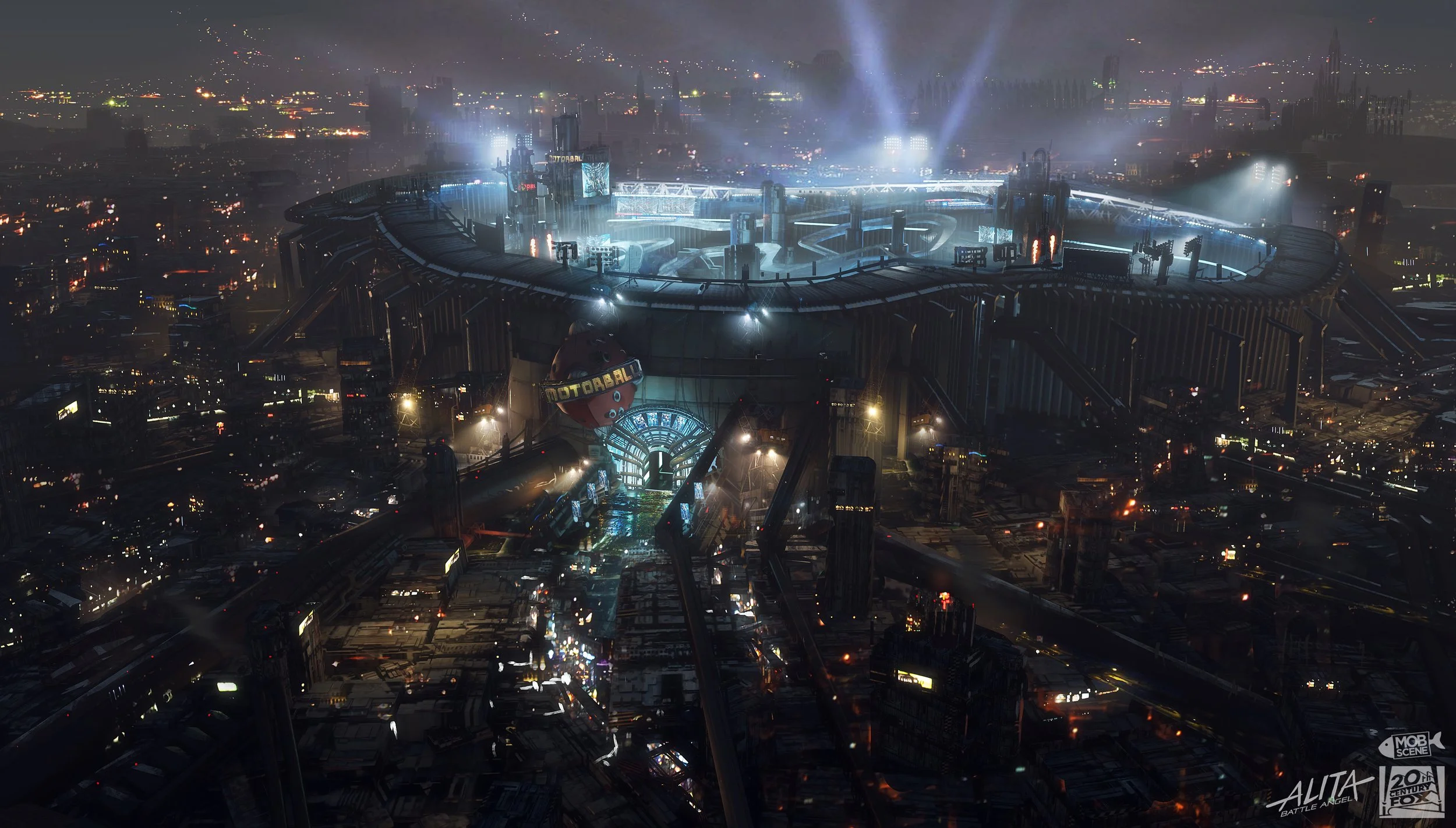
“Jason Jensen, Senior Creative Director at Mob Scene, described NUEN Studio’s work as “incredible,” highlighting the quick turnaround, polish, and level of detail that elevated the final pieces. NUEN Studio also received highly positive feedback from James Cameron and Robert Rodriguez on the final deliveries.”
5. The Real Lesson Was Learning How a World Breathes
Looking back, Alita: Battle Angel taught us something important about confidence.
Not the kind of confidence that comes before the work.
The kind that is built through the work.
At the beginning, we did feel intimidated. It would not be honest to say otherwise. This was a world-class project tied to a legendary manga, a major Hollywood studio, and filmmakers known for pushing the boundaries of visual storytelling and technology. For a concept art team, that is exciting. But it is also heavy.
The project reminded us that fear is not always a bad signal.
Sometimes fear simply means the work matters.
The answer was not to pretend the pressure did not exist. The answer was to work through it: research deeper, observe more carefully, build a stronger process, communicate clearly, take feedback seriously, and keep refining until the world started to feel right.
That is what made the project special.
Not only the final images, but the journey from uncertainty to alignment.
At first, Iron City felt like a massive world we were standing outside of, trying to understand through fragments.
By the end, after days of references, blockouts, paint-overs, feedback, revisions, and cross-checking, it began to feel like a place we had actually walked through.
That is one of the beautiful things about concept art.
You do not only draw a place.
You study it.
You question it.
You build its logic.
You learn how it breathes.
Even though NUEN Studio’s role was only one part of the wider Alita universe, we never saw it as a small job. Background art has power. It shapes mood. It carries world-building. It tells the audience what kind of place they are entering before a character says a single word.
We did not create Alita.
We did not build the whole Iron City.
But for a brief moment, NUEN Studio was trusted to help bring one corner of that world to life. And that is something we are still proud of.