
Vietnamese artists joining global stage, DO and DON'T?
“What is it really like to work on a global project?”
It’s a question we have asked ourselves many times, especially in the early days when we first received briefs from studios, agencies, publishers, production houses, or major IP holders outside Vietnam’s creative scene.
The first feeling is always a little surreal.
An email notification you have to read twice, just to make sure it is not spam or some kind of scam. A short introduction. A brief that is concise but surprisingly clear. A list of terms. An NDA. A reference folder that, even at first glance, makes you feel both excited and slightly overwhelmed.
For many Vietnamese artists, being part of an international project is a meaningful milestone. It is not just about making your portfolio look more impressive, or adding a strong credit to your name. It is also the feeling that your creative work is entering a much bigger playing field, where the final outcome may be seen by audiences around the world.
But once the initial excitement settles, work is still work.
And working on a global project is not just about drawing better.
It is about how well you understand the brief. How you communicate with the Art Director. How you handle feedback. How you work within the pipeline. How clearly you understand the terms, limitations, and responsibilities that come with the project.
One small careless move can close a door that has only just opened.
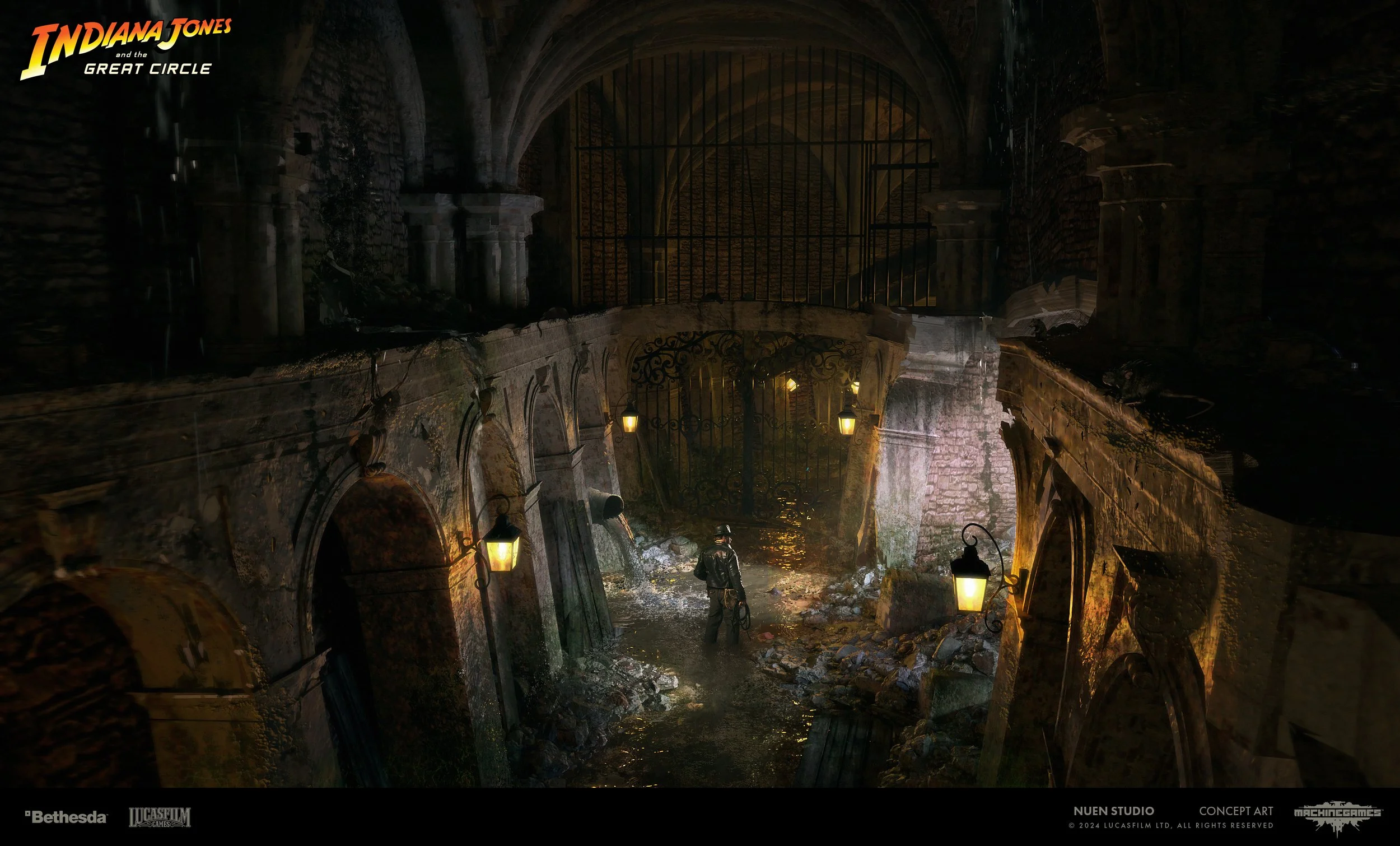
After years of working on projects such as Alita: Battle Angel, Indiana Jones and the Great Circle, Battletech: Heavy Metal, and other international productions, the NUEN Studio team has gathered a few lessons from our own experience.
Hopefully, these reflections can help other artists better understand, and better prepare for, the kind of work that happens on a global stage.
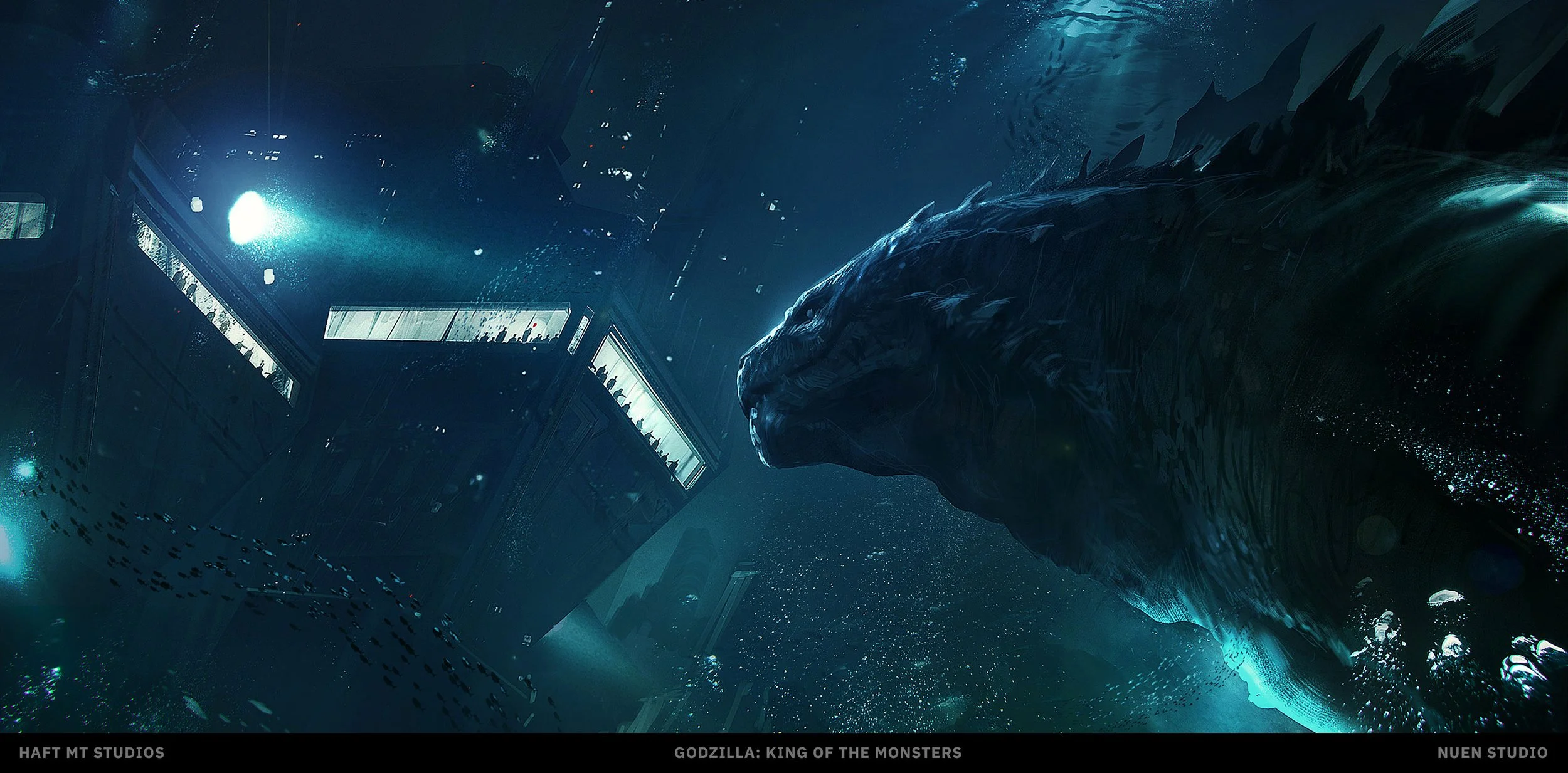
1. RECEIVE - READ - UNDERSTAND THE BRIEF
There is a very natural reaction when you receive an exciting brief: you want to start sketching right away.
In your head, things are already moving. Composition. Objects. Mood. This area might need cooler lighting. That corner could use a bit of industrial texture. If it is sci-fi, maybe add more mechanical elements. If it is cyberpunk, bring in some neon. If it is fantasy, maybe some armor, fog, and drama.
That part is fun.
But with larger projects, the first step is usually not drawing.
The first step is to read, understand, and clarify the brief.
How much creative freedom do you actually have? Which parts of the IP are fixed and cannot be changed? Is this piece for pre-production, production concept, marketing art, key visual, or a reference for the 3D, VFX, or animation team later on? Who is reviewing your work: a Producer, an Art Director, a Creative Director, or a broader client-side team?
These questions may not sound very “artistic.” But they are exactly what help your creativity move in the right direction.
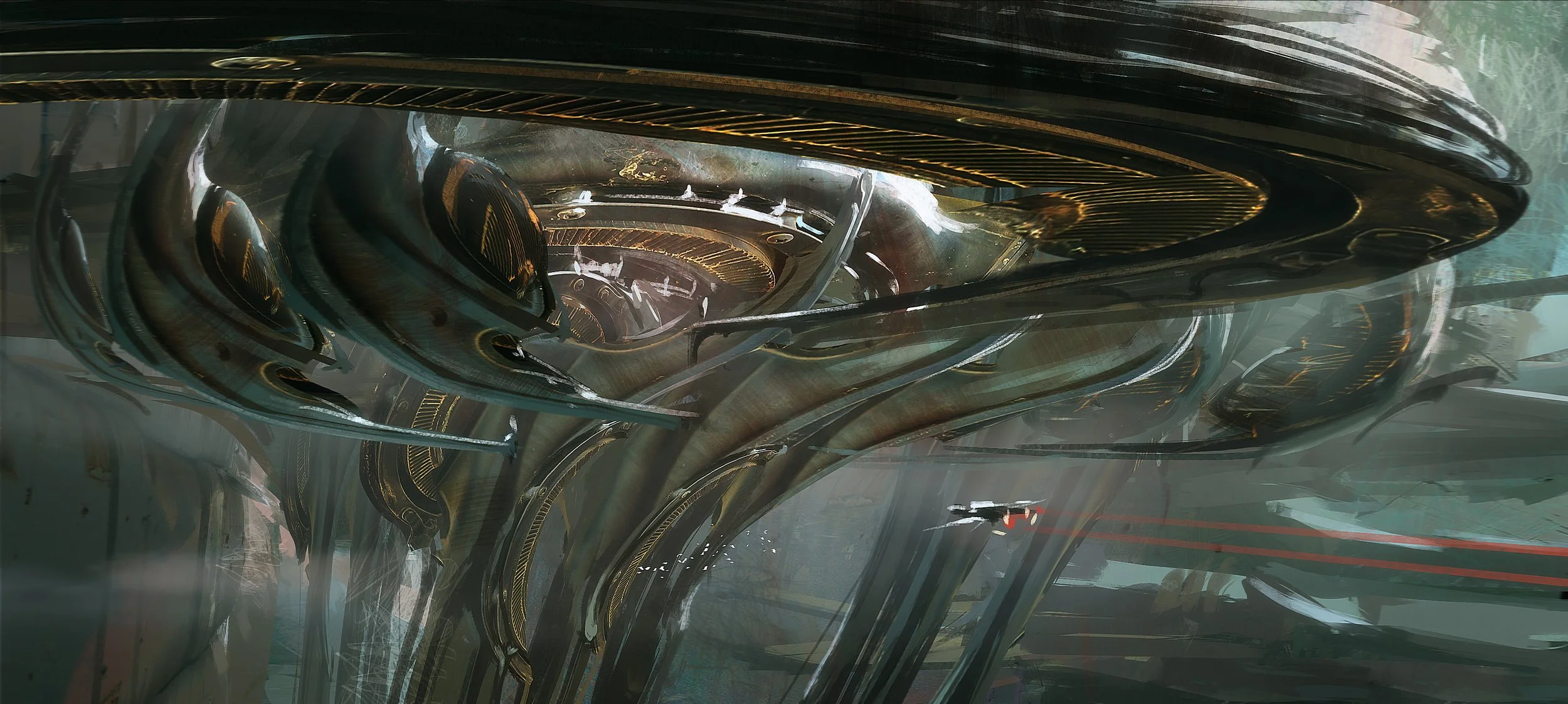
In a global project, an artist is not creating a personal artwork just to post on ArtStation. You are creating one piece within a much larger machine, where a decision about proportion, material, shape, lighting, or design logic can affect many other teams down the line.
A concept can look beautiful and still not be good enough if it does not serve the pipeline behind it.
So when you receive a brief, do not be afraid to ask questions.
Not asking often leads to something much worse: guessing while working.
And in production, “guessing” can be a very expensive risk. Sometimes, being slightly off in the beginning can send the whole project in the wrong direction.
2. NDA - CONFIDENTIALITY AGREEMENT
In today’s world, where almost anything can be shared with a few taps, receiving a big project can come with a small temptation: the urge to hint at it.
A vague status update. A story showing a corner of your workspace. A “can’t wait to show this” post. A screenshot that accidentally reveals a moodboard. A casual mention in a conversation that feels harmless at the time.
With major projects, even a tiny detail can be highly sensitive. There is a reason NDAs exist.
As a professional artist, you are not only responsible for making good artwork. You also need to know when not to reveal anything about the project you are working on, whether through writing, images, or even spoken words.
There are projects you may have to wait years before you can talk about them publicly. Your portfolio can wait. Your reputation, and the legal risks involved, are not things worth testing.
3. START BY ASKING QUESTIONS
One of the most common misunderstandings in concept art is treating the idea development process as a reference-hunting session.
You see a nice image, you save it. You find a mood that fits, you put it on the board. You follow whatever the client sends you. If it is cyberpunk, you add neon. If it is industrial, you add metal, rust, and pipes. If it is futuristic, you add a few panel lines.
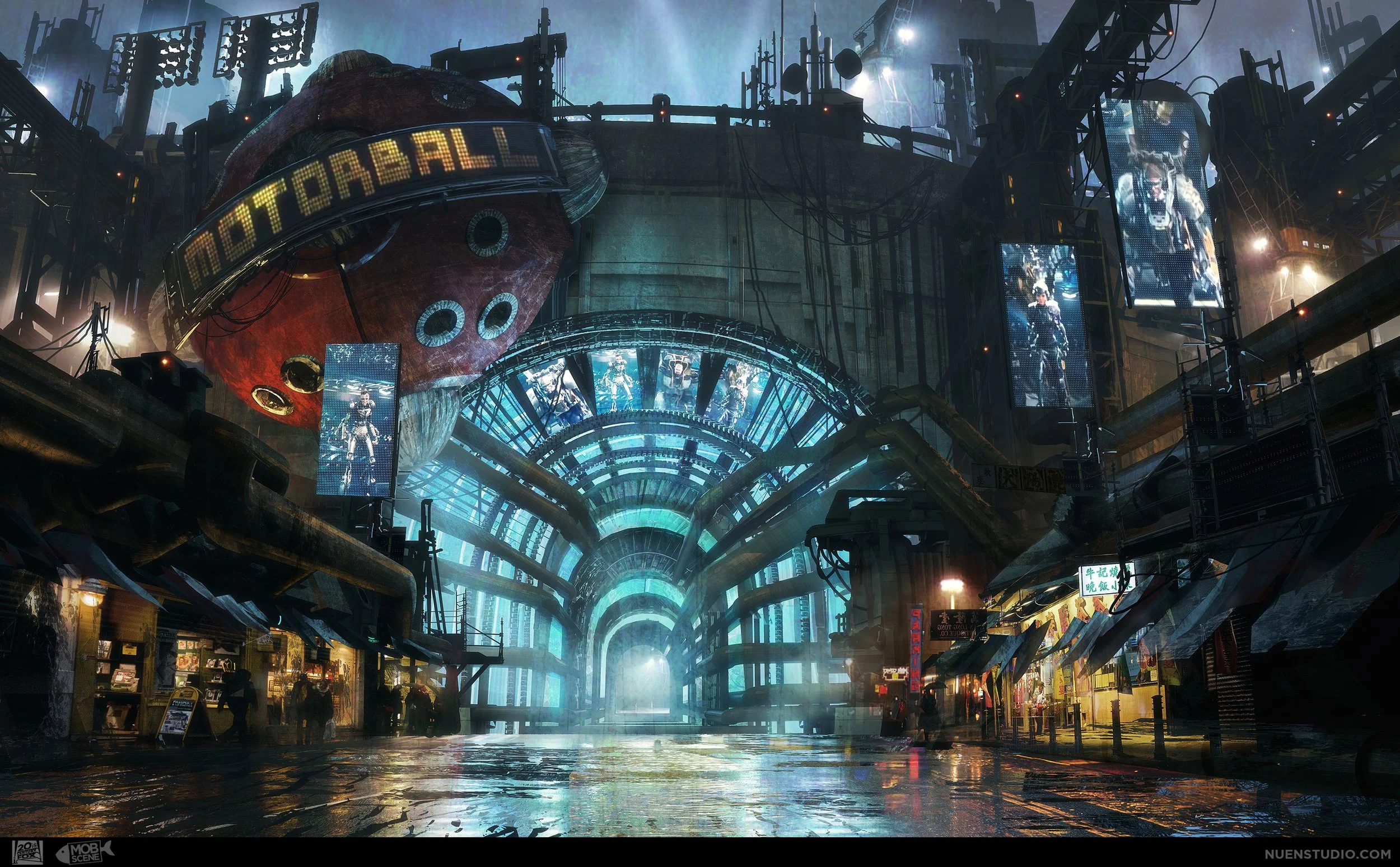
This can help you move fast in the beginning, but it can also make the design feel clichéd, predictable, and shallow.
At first glance, the artwork may seem to move in the right direction and match the general art style. But once you look closer, something is missing. The logic underneath is not there.
For fictional worlds that already have their own history, fanbase, visual language, and internal rules, research needs to go much deeper. The question is not only, “What does this world look like?” The better question is, “How does this world actually work?”
Was this place built from prosperity or from chaos? What kind of technology exists here? Is this building placed there simply because it looks good, or because it once served a specific function? How do people live in this world? How do they move around? What do they believe in?
For example, when working on environments for a world like Alita: Battle Angel, the task was never just about making a cyberpunk city look “cool.” Elements such as industrial design, Latin and colonial architectural influences, antique details, the feeling of age, repair, density, and urban life all had to be understood as part of the world-building logic.
A convincing fictional world is not created by adding more details. It is created by adding the right details.
A beautiful artwork can catch someone’s eye. A strong concept makes people believe that the world existed before the frame began, and will continue to exist after the frame ends.
4. CREATIVITY WITHIN BOUNDARIES
There is a common belief that the fewer limitations an artist has, the freer they are.
It sounds reasonable. But in large-scale projects, that is not always the case.
A brief that is too vague may feel comfortable at first. But later on, it can easily turn into an endless loop of revisions. The client thinks the artist understands. The artist thinks the client wants a certain direction. The Art Director is imagining something else. The Producer needs an output that fits the production timeline.
And eventually, everyone realizes they have “agreed” on something that was never clearly defined.
That is why the creative boundary is so important.
A boundary does not exist to limit the artist. It helps the artist understand how far they can go, and how to recognize when they are drifting away from the core direction before too much time and effort are spent.
Moodboards, visual explorations, thumbnails, 3D blockouts, and quick sketches are not just tools for presenting ideas. They help the client see what the artist is thinking. They help the Art Director pull the work back before things go too far. And they help both sides align on which areas allow creative exploration, and which parts must stay true to the spirit of the IP.
When you are not sure what to do, sometimes the best place to start is by understanding what you should not do.
“Working with Nuen was an awesome experience! It is great to see environments come together from your own 3d level block out you sent to receive back an amazing concept or even everything in a 3d scene concept too!
The introduction process from the art direction we set up to nailing the tone took no time at all, which is great. It shows that Nuen has an amazing talent for understanding the ideas and execute it perfectly! The feedback process went smoothly and he stayed reliable to 100%. It was a great experience working with him!”
5. PROCESS VS. RESULT
From the outside, artists are often judged by the final result.
But during production, other people on the project also evaluate artists through the way they work.
Did the artist follow the agreed pipeline? Did the 3D blockout help solve proportion and spatial issues? Is the PSD file clean? Is the Blender or 3D file organized enough for someone else to open and continue working on it?
These may sound like small technical details, but they are exactly what separate an artist who can make good images from an artist who can work inside a multi-layered production process.
In a global project, the process exists to keep the entire production consistent and coordinated. Your file may not stop with you. It may be opened by a modeler, an animator, a VFX artist, another designer, a producer checking versions, or a team in another time zone that needs to quickly understand what you have done without calling you in the middle of the night in Vietnam.
A messy file is not just annoying. It slows people down. It creates friction for the next person in the pipeline.
And in production, slowing things down is also a cost.
That is why small details matter: clear layers, understandable naming, organized folders, logical versioning, properly sourced assets, and final files in the right format. These things may not make the artwork look better immediately, but they make you far more reliable in the eyes of the people working with you.
6. NOT SURE YET? DON’T RENDER.
One trap we have seen many artists fall into is going too deep into detail before the overall structure is solid.
Rendering can be genuinely satisfying. Adding scratches to metal. Adding smoke. Adding rim light. Adding texture. All of these things can make the artwork feel more “finished” very quickly.
But if the overall structure is not working, if the proportions are off, if the composition is unclear, if the design logic is weak, or if the core concept has not been approved, the more you render, the more you lock yourself into the wrong direction.
Details will not save a weak idea.
They only make the mistake more expensive.
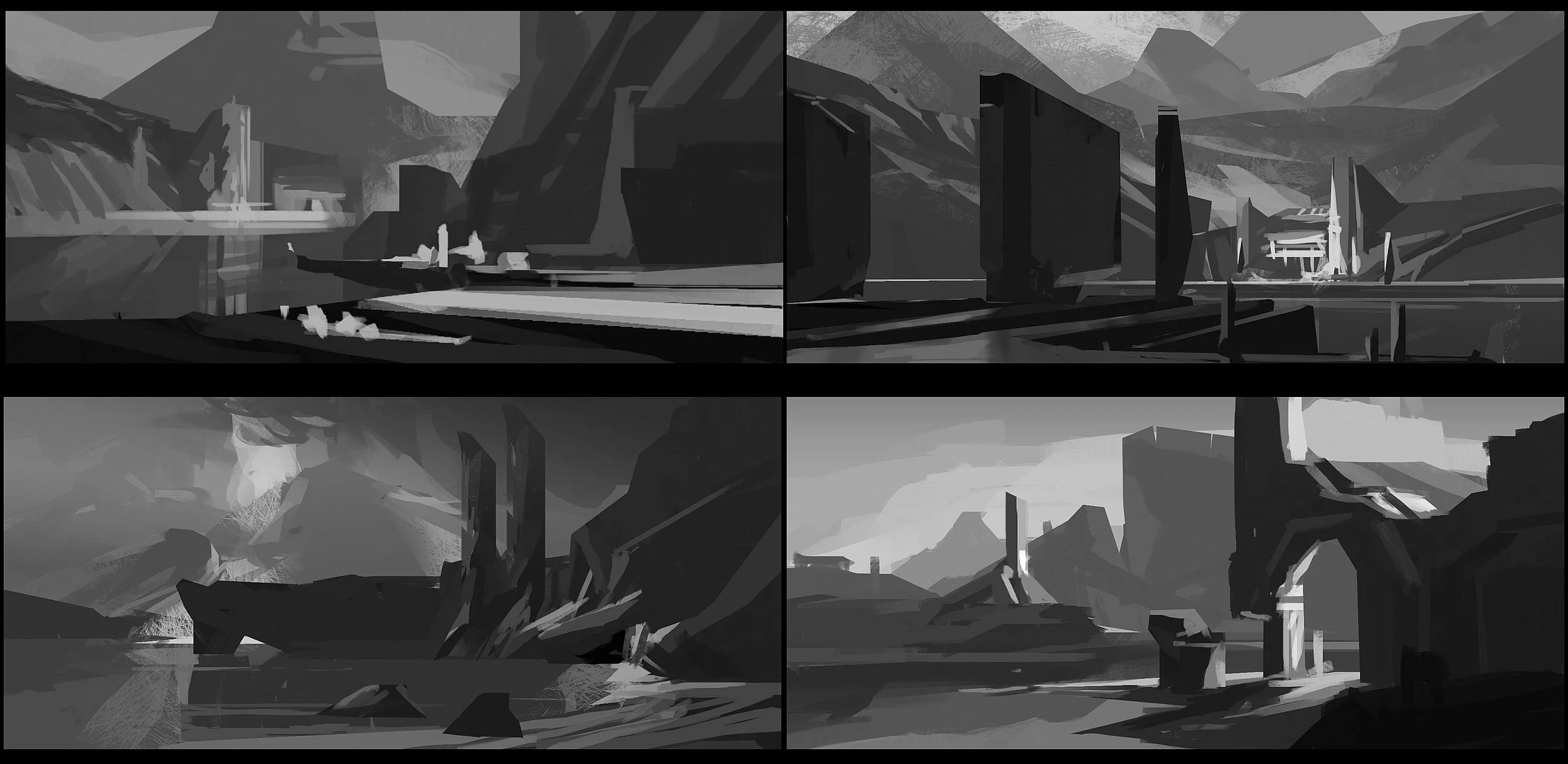
This is why seemingly rough stages such as thumbnails, blockouts, silhouettes, grayscale compositions, and quick callouts are so important. They help artists find problems early, fix them faster, and avoid becoming too emotionally attached to a direction that may not move forward.
In production, slow and steady really does matter.
7. FEEDBACK IS NOT REJECTION
This may be one of the hardest lessons to learn.
When you have spent days on a concept, perhaps staying up late to refine every detail, and then receive feedback such as:
“Can we make it feel more grounded?”
“This doesn’t fit the world.”
“Can we explore another direction?”
The first feeling can hit hard.
It is easy to feel like something you put so much effort into has been rejected. And because the work carries so much of your time and energy, that feeling can quickly become personal.
But in a professional environment, feedback is not a personal attack. It is part of the process of bringing the work closer to the larger goal.
A good artist does not only listen to feedback. They unpack it and try to understand what is behind it.
Behind “too generic,” the real issue may be that the design does not yet carry enough identity from the IP.
Behind “make it more premium,” the issue may be material language.
Behind “it feels too clean,” the world may need more signs of use, wear, time, and lived-in history.
Instead of revising mechanically, ask better questions.
Is the issue about mood, silhouette, function, storytelling, mechanics, or level of detail? Does the client dislike the image itself, or does the image simply not solve the right problem for the project?
Knowing how to defend your design is important. But defending a design does not mean trying to win an argument. It means being able to explain your professional reasoning clearly, whether it is about composition, anatomy, visual hierarchy, or world-building logic.
And if revisions are needed, do not just revise for the sake of revising.
Offer solutions.
Ideally, offer more than one direction.
A professional artist does not ask, “Why don’t they understand me?”
They ask, “What can I do to make this work serve the project better, while still keeping the quality and character I believe in?”
8. WHEN FINAL IS NOT THE END
Many people think the most important moment is when the final file gets approved.
And yes, that is a great moment.
But the way you deliver the work may be what decides whether future opportunities continue to come your way.
A good concept design should include the necessary turnarounds, callouts, and material guides if the next team needs to build it in 3D.
An illustration should come with an optimized PSD, clean layers, and correct versions.
A 3D model should be in the right format, with suitable topology, manageable file size, and enough organization so that the person opening it does not spend half a day trying to understand what is going on.
Beyond the creative files, there are also things that may feel very “not art” but are still extremely important: invoices, payment terms, and the client’s finance process.
For many artists, this may be the least exciting part of the project.
But for international clients, it is still part of the working experience.
You may be a very strong artist. But if every delivery requires the client to ask, “Which file is final?” If every payment is delayed because information is missing. If every portfolio permission request becomes complicated. Then your overall professionalism takes a hit.
And one more important thing: do not rush to show the project.
For major productions, permission to post your work may take months, sometimes years. Sometimes the project has already been completed for a long time, but you still cannot make it public. Sometimes the artwork is already out in the world, but you still need written confirmation before uploading it to ArtStation, Behance, or your social media.
Ask clearly. Get permission by email. Wait for confirmation.
A portfolio post may bring a few thousand views. It may even open up new opportunities.
But one NDA violation can damage years of trust. And the door to future large-scale projects can close very quickly because of something that was entirely avoidable.
9. WHAT DO VIETNAMESE ARTISTS BRING TO THE GLOBAL STAGE?

After years of working on large-scale projects and alongside many collaborators, we believe Vietnamese artists have many real strengths.
We are flexible. We learn quickly and adapt fast. We are good at solving problems under less-than-ideal conditions. Many Vietnamese artists have a strong eye, solid craft, the ability to work across different styles, and a very “go all in” attitude when we truly believe in a project.
But to go further, being good within your own craft is sometimes not enough.
The global stage requires artists to have a production mindset, to understand IP, and to respect process. It requires asking the right questions, understanding the pipeline, communicating proactively, and receiving feedback without losing your confidence.
To put it simply:
Artists do not only need to make good images. Artists need to understand the process and become good collaborators.
And perhaps that is the biggest difference.
When we take part in a global project, we are no longer representing only our personal portfolios. In some ways, we are also representing how the world sees creative talent from Vietnam.
The goal is to help build a world convincing enough for the audience to believe in it.
And if we can do that, a global project becomes more than just a nice credit in a portfolio.
It becomes a real step forward in the way we practice our craft, and in how Vietnam appears on the global creative map.