
Designing the USS Protostar Cargo Bay: When a Starship Lands, Everything Changes
Star Trek: Prodigy, USS Protostar Interior Series, Part 1: Cargo Bay
Most starships in the Trek universe never touch the ground. The USS Protostar does. And that single design decision changed everything about how the Cargo Bay had to work.
When the Protostar production team brought Nuen Studio in to design the ship's interior spaces from scratch, the Cargo Bay brief wasn't just "make it look like a cargo bay." It was: design a space that functions as a working loading dock, houses a massive in-universe fabrication machine, connects visually to the Third Nacelle running through the ship's core, and gives the animation team enough to build chase sequences, dramatic reveals, and character moments across multiple episodes. All of it original. All of it had to feel unmistakably Star Trek.
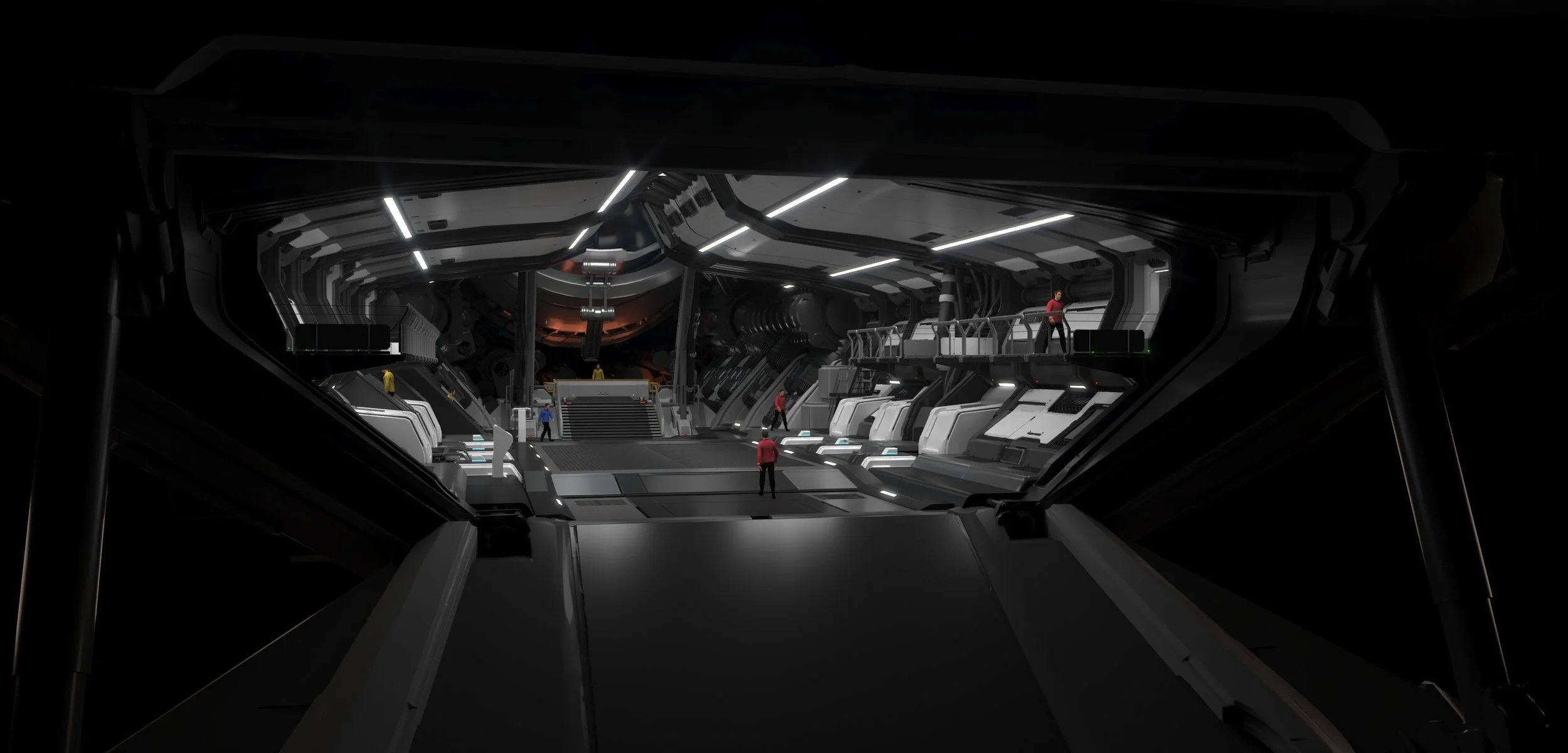
Starting From the Ship Out
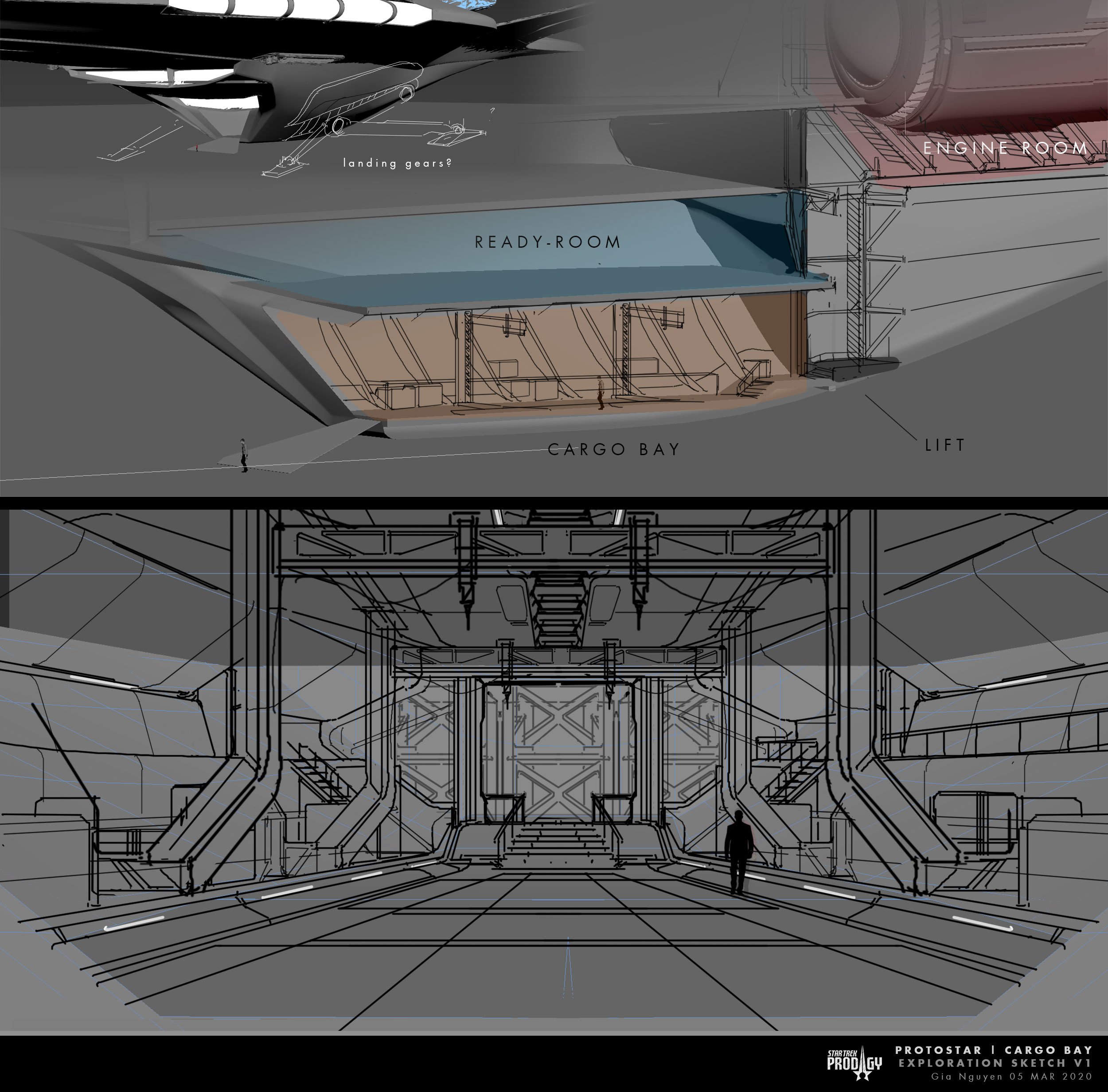
Early ideation sketches
Before a single interior detail was drawn, the first question was spatial: where does the Cargo Bay actually sit inside the Protostar?
The early ideation phase started with a sectional view of the ship, mapping the Cargo Bay's relationship to the surrounding spaces: the Ready Room directly above, the Engine Room adjacent, the Lift connecting the levels, and, critically, the landing gear below. That last element drove a design constraint no standard Trek cargo bay had ever needed to address. If the ship lands, the bay floor has to accommodate the structural reality of landing gear deployment. The layout had to account for it from the start, not retrofit it later.
The interior perspective sketch that followed established the foundational spatial language: a long axial corridor, symmetrical left and right bays, multi-level walkways, and a human silhouette dropped into the center to lock in the sense of scale. What looked like a big space in section had to feel genuinely massive from inside. That figure is always the first thing placed in a new interior sketch.
The Vex-Tex Machine: Designing Something That Has to Move
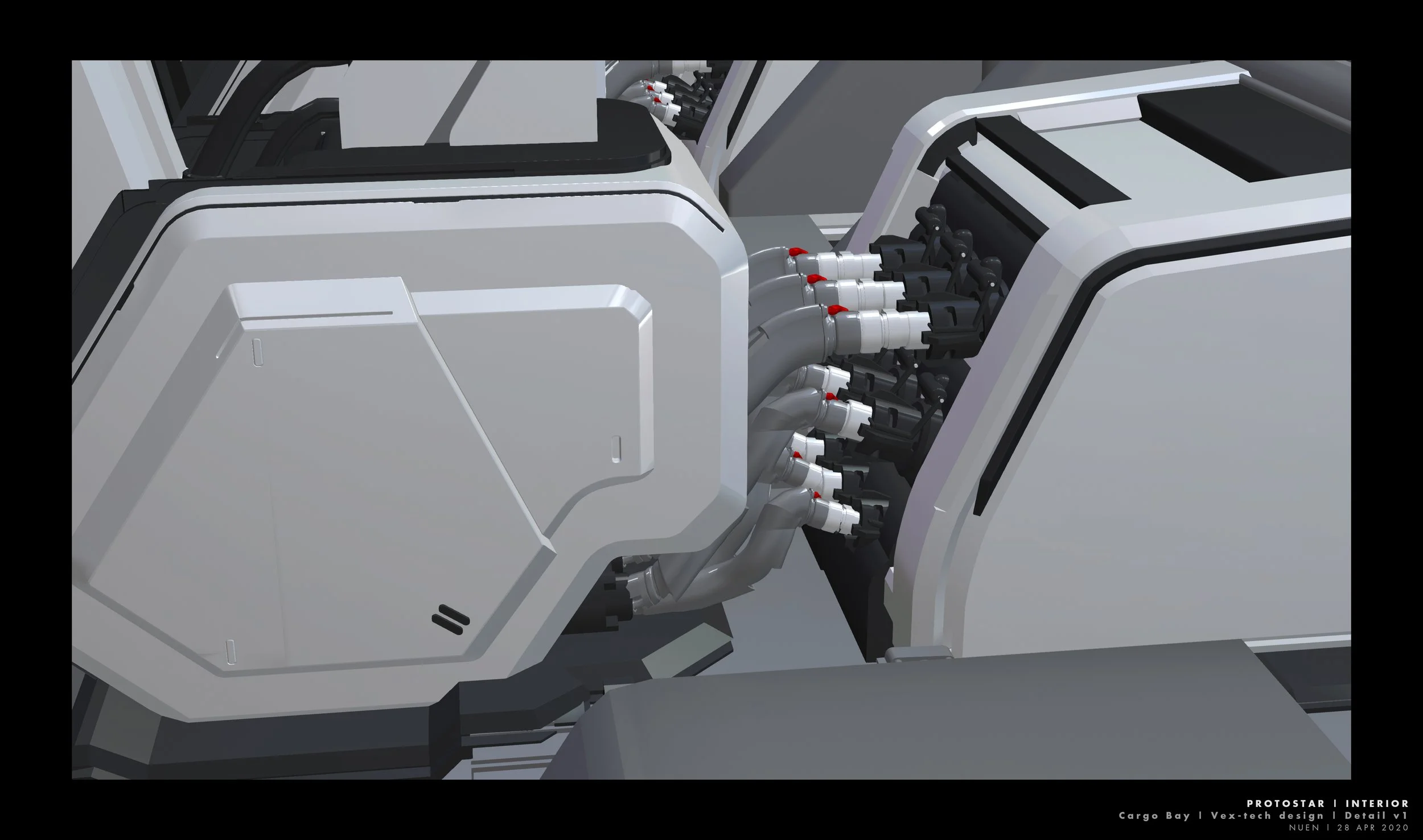
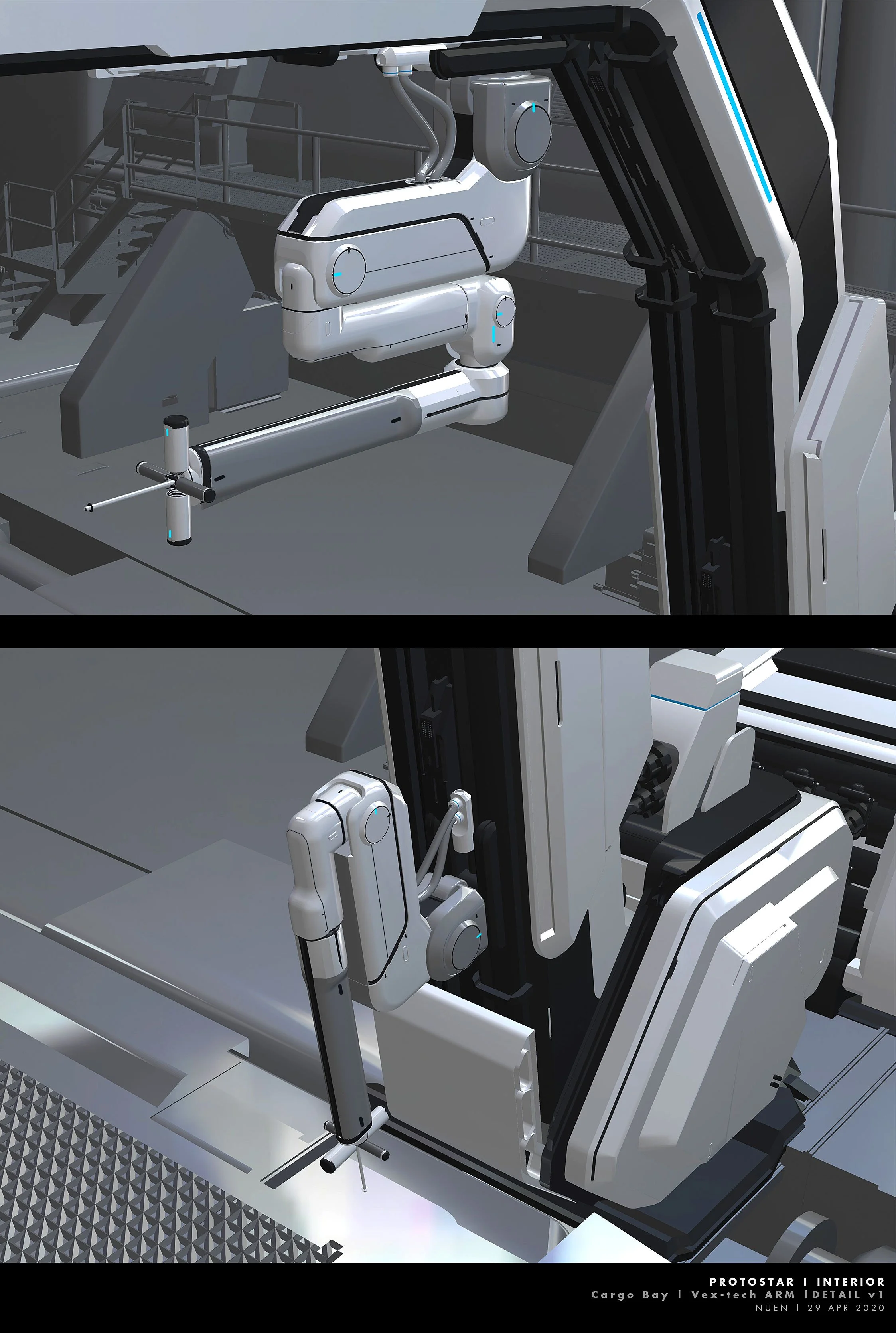
The Vex-Tex is a fabrication machine built into the Cargo Bay, essentially a 3D printer at starship scale. The brief required it to be functional, recognizable as technology, and capable of folding down into a compact rest position before deploying into its operational state. The animation team needed to be able to build that sequence, which meant the design had to be engineered with that movement in mind from the first sketch.
Three iterations were developed. The first leaned into mechanical complexity: multiple articulated arms, visible joints, industrial weight. It read clearly as machinery but was dense enough that it risked cluttering the space and making the animation of its movement difficult to follow. The second iteration simplified the arch structure significantly, trading some mechanical detail for a cleaner read and more obvious articulation points. The third refined that further, settling on an arch-gate form with robotic arms folded inward at rest and extending outward during operation.
The final design was delivered as an annotated 3D reference video alongside the concept art, showing the fold-and-deploy sequence frame by frame. Not a written description, but a visual reference the animation team could use directly without interpretation. That handoff process is part of what made the design usable rather than just presentable.
The Detail Nobody Expected: You Can See the Nacelle
One of the decisions that makes the Protostar's Cargo Bay unusual within the Trek universe is that the Third Nacelle is visible from inside the bay. The engine core runs through the ship in a way that a crew member standing in the Cargo Bay can look up and see it directly.
That detail wasn't decorative. The Protostar is a ship full of technology its young crew is still figuring out. Making the nacelle visible from the most utilitarian space on the ship, the place where you load cargo and maintain equipment, creates a constant reminder that this vessel is something different. The scale of the engineering is impossible to ignore. It also gave the production team a recurring visual anchor for scenes set in the bay, something distinctive that immediately tells the audience where they are without needing a title card.
The final design preserves that sight line deliberately. The axial layout of the bay, the positioning of the Vex-Tex machine, and the ceiling clearances were all developed to keep the nacelle visible from multiple camera angles inside the space.
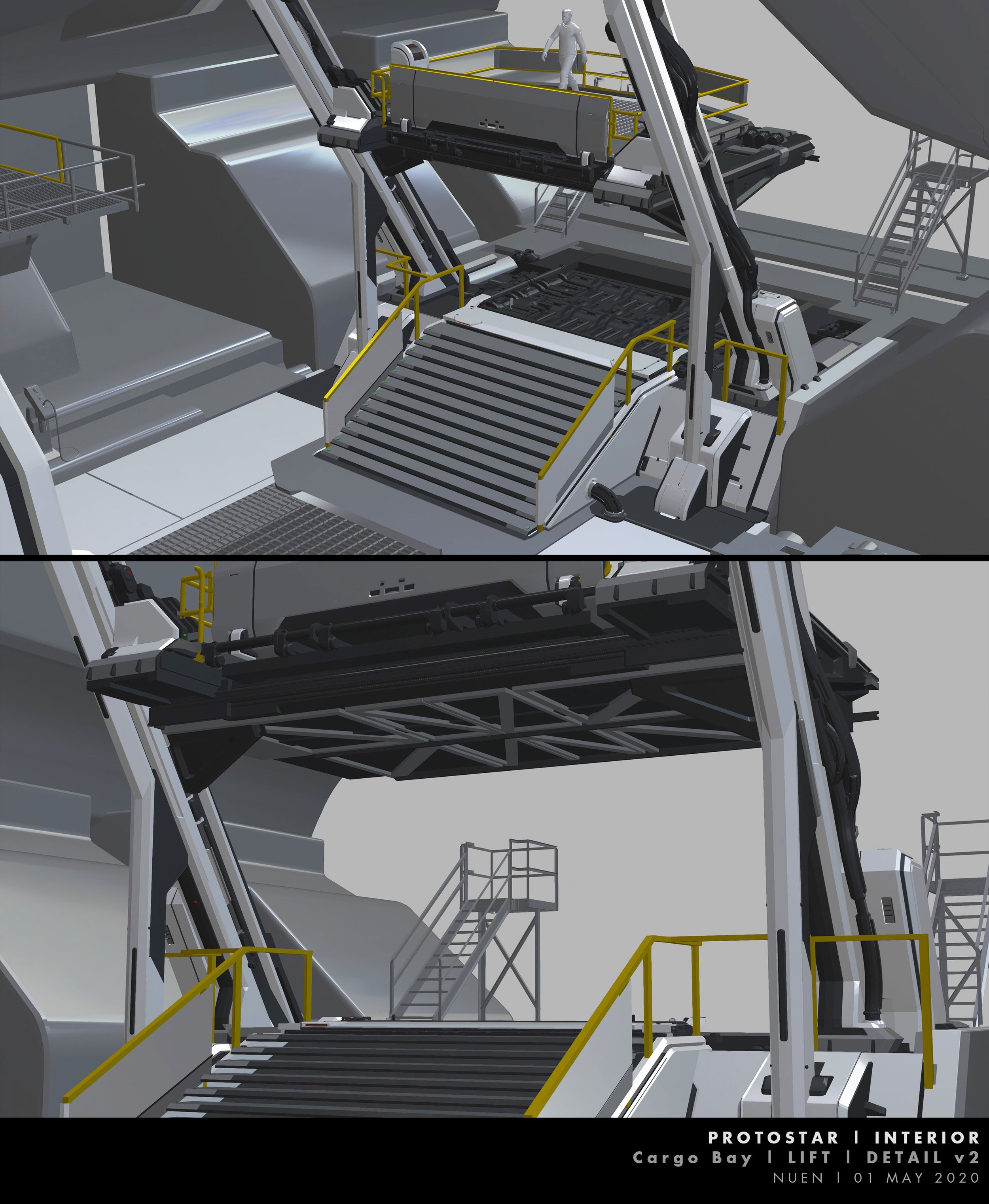
From File to Screen, 1:1
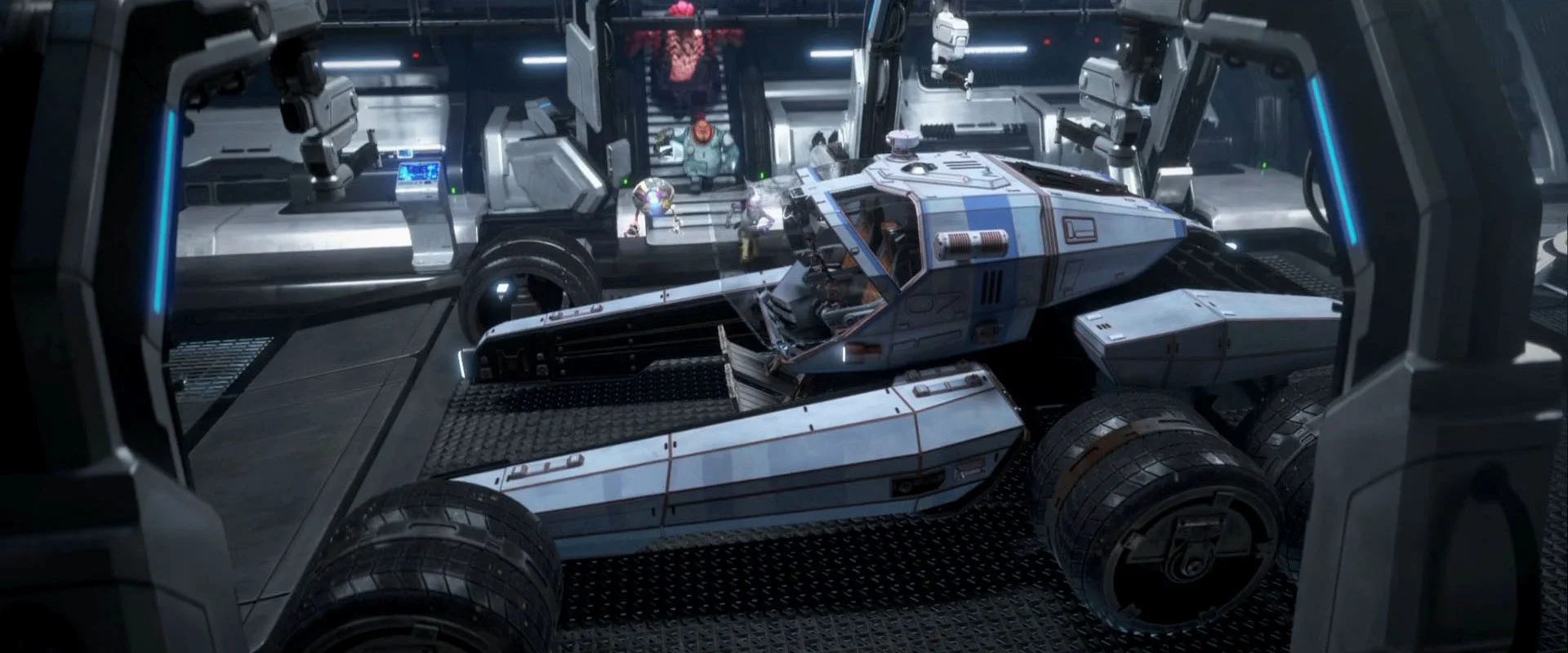
The moment that confirmed the process had worked wasn't a client approval email. It was seeing the Cargo Bay appear on screen and recognizing the 3D block-out file in what the production team had built.
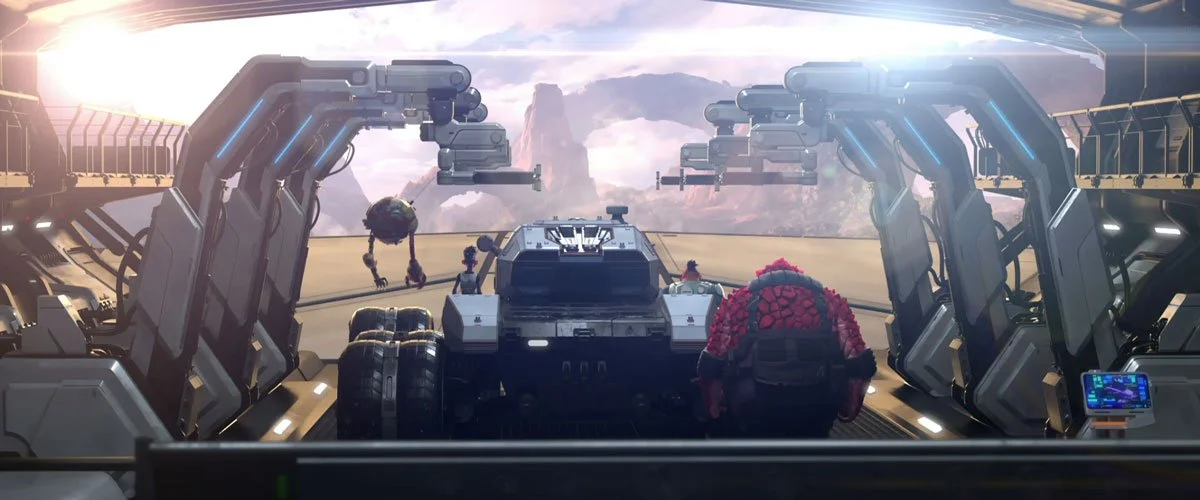
The structural geometry, the proportions, the walkway heights, the placement of the Vex-Tex: all of it translated directly. No significant reinterpretation in production, no "we changed it because the original didn't work in 3D." The design worked because it was developed in three dimensions from early in the process, not retrofitted from a 2D painting after the fact.
That's the difference between a concept that looks right and a concept that builds right. For an animated production working at the pace Star Trek: Prodigy required, that distinction matters every time a new space goes into production.
Next in the USS Protostar series: Engine Room.
USS Protostar Cargo Bay Design
Looking to build your next world from the ground up?
Let’s collaborate: project@nuenstudio.com