
One Game, Six Countries, One Visual Identity
Art Direction Lessons from Indiana Jones and the Great Circle
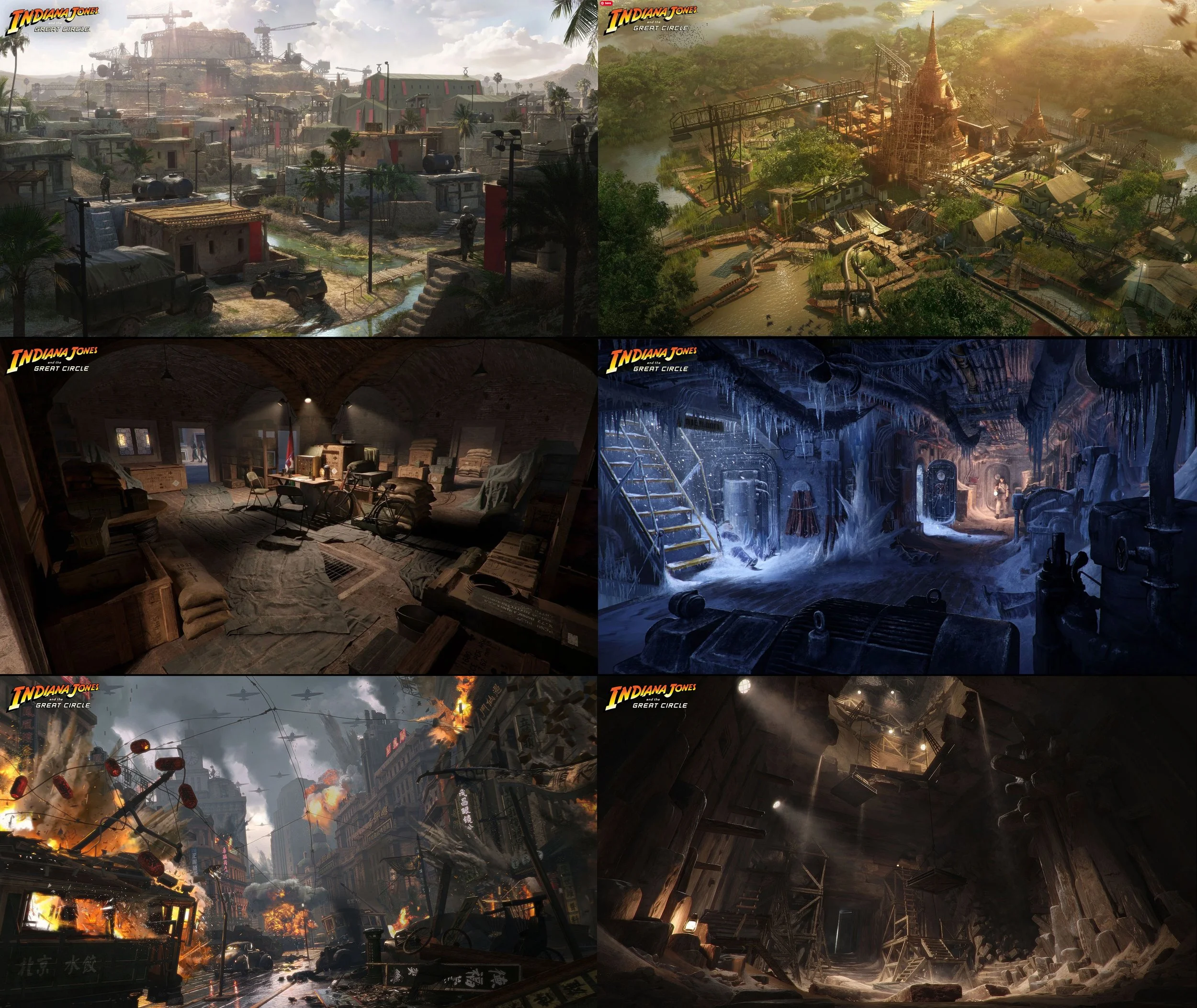
Giza. Vatican. Himalayas. Sukhothai. Shanghai. Iraq. Each with its own architecture, its own light, its own thousand years of history. And yet, the moment a player steps into any of these locations in Indiana Jones and the Great Circle, there's no question which game they're in.
That coherence doesn't come from the concept art vendor. It comes from the art direction.
The Problem Nobody Talks About: Visual Identity at Scale
The obvious challenge in a game with many real-world locations is accuracy: getting the architecture right, the period details correct, the cultural references respectful and grounded. That part gets a lot of attention.
The harder problem gets less attention: once every location is historically accurate and visually distinct, what stops the game from feeling like six different worlds stitched together?
Working with MachineGames from 2020 through the game's release in 2025, producing over 60 environment concepts across the game's major locations, we had a front-row seat to what genuinely excellent multi-location art direction looks like in practice. These are four things we took away from that experience.
Principle 1: The Occupation Layer Is the Glue
One of the clearest things about working under MachineGames' art direction was how precisely defined the visual through-line already was when we came in. Every location had been touched by the same antagonist force: the same equipment, the same crates and signage, the same military infrastructure imposed onto whatever existed before.
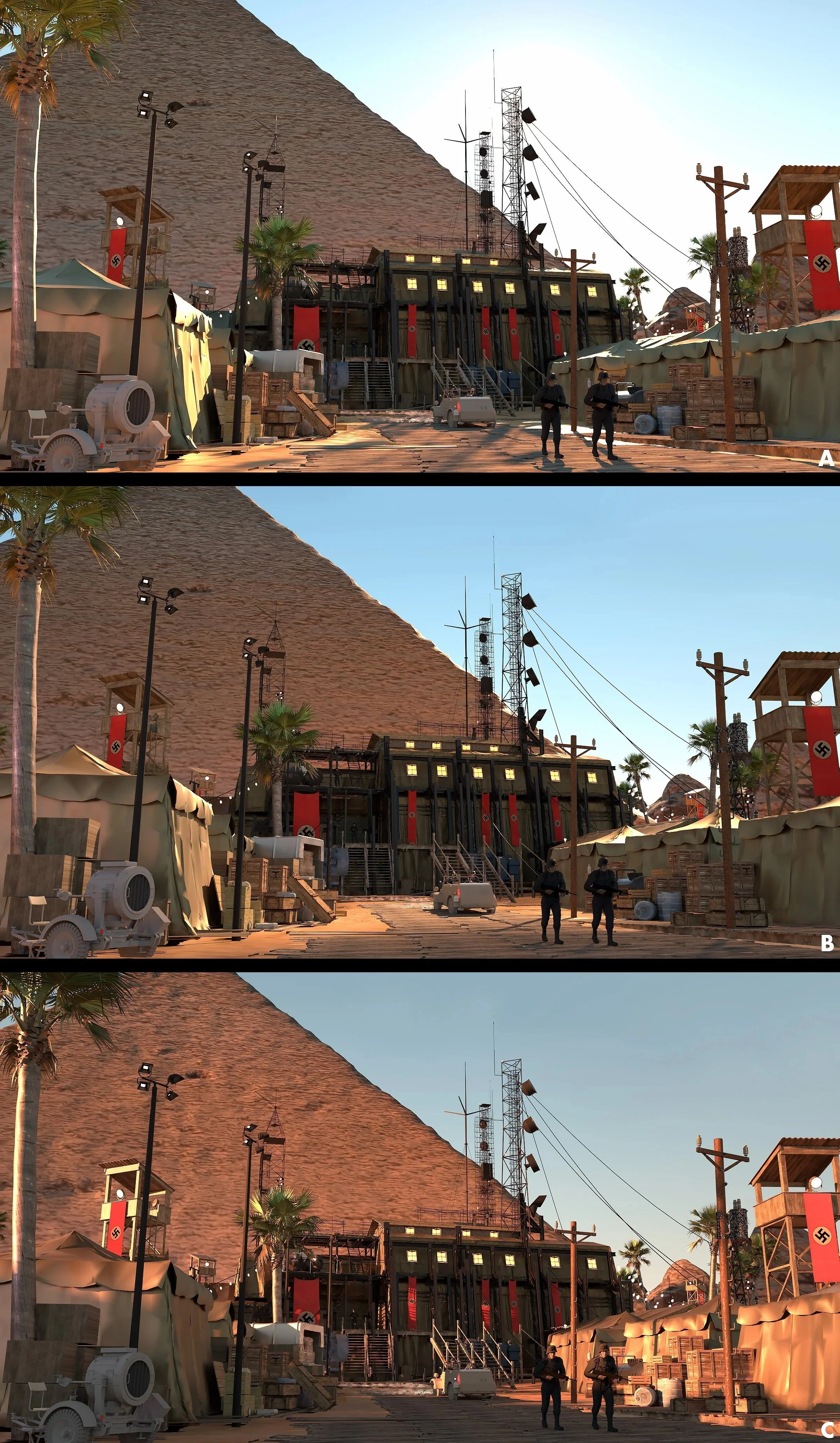
That occupation layer was the glue. It was a consistent visual logic that traveled with the player across every geography. Our job wasn't to invent it. It was to understand it deeply enough to apply it to new locations in a way that felt inevitable rather than forced. A bunker cut into the base of a pyramid. Military hardware in the shadow of a cathedral column. The logic was already there. Executing it well meant internalizing why it worked, not just what it looked like.
“What we took away: a strong visual through-line decided early, and communicated clearly, is what makes multi-location work feel coherent rather than episodic. When that foundation exists, a vendor can extend it. When it doesn’t, no amount of good execution at the asset level fixes the problem.”
Principle 2: Research Is the Starting Point, Not the Destination
Every location we worked on required genuine historical and architectural research before concept work began. But what MachineGames' direction made clear was that research and creative vision are two separate things, and confusing them creates problems.
Research told us what each location was: the architectural language, the period details, the quality of light at different times of day. The brief told us what each location needed to be inside this specific game: the strongest possible establishing angle, the version of the space that would make a player feel most immediately that they were somewhere extraordinary.
This distinction mattered especially for locations like Sukhothai, which players would arrive at with far less prior mental imagery than somewhere like Giza. The research gave us grounding. The art direction gave us permission to reach for something beyond the documentary. Both were necessary, and the balance between them was something MachineGames held with a lot of intention.

“What we took away: a brief that clearly separates “here’s what this place is” from “here’s what it needs to do in our game” gives a vendor something to aim for that research alone can’t provide.”
Principle 3: Scale and Light Are Production Problems, Not Just Painterly Ones
Working on a project of this scope made something concrete that we'd understood in theory before: decisions about camera angle and lighting aren't just aesthetic choices. They're information that layout and lighting teams downstream need in order to do their jobs.
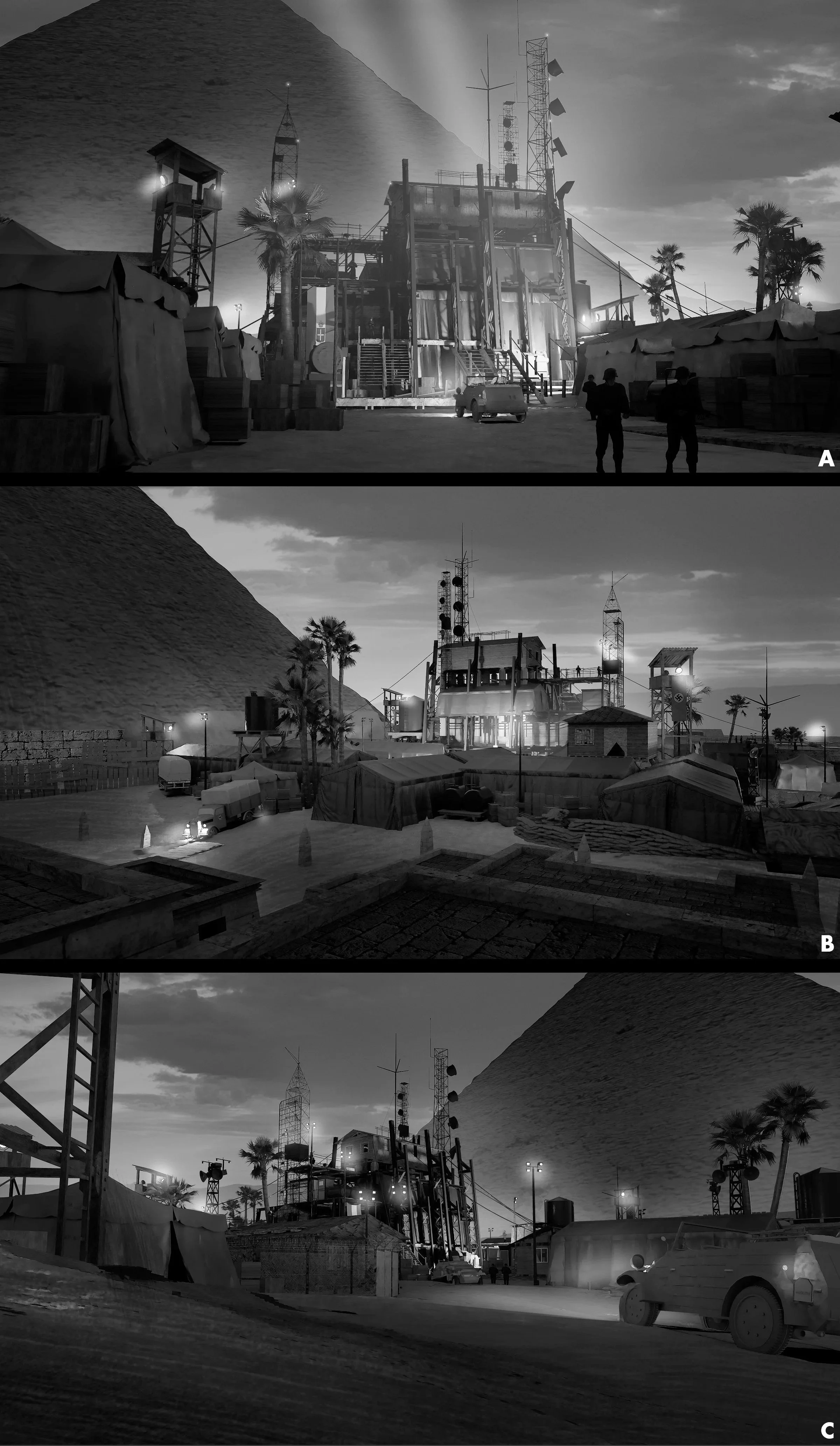
The harsh flat light of the Egyptian desert creates different structural challenges for a space than the filtered, directional light coming through stone columns in a European setting. These differences affect not just how a concept looks, but what the actual geometry of the space has to be to hold up under in-engine lighting conditions.

“What we took away: when an Art Director is precise about what a space needs to feel like, the gap between a 2D concept and a production-ready file narrows considerably. The brief does half the technical work before the vendor starts.”
Delivering 3D block-outs alongside 2D concepts on this project reinforced for us how much clarity that adds for the teams receiving the files. It's not a replacement for art direction. It's a way of making the art direction more usable at the handoff stage. MachineGames' clarity about what each space needed to communicate made that translation significantly more straightforward than it might otherwise have been.
For a project spanning multiple geographies, this becomes a consistency tool as much as a production efficiency tool. The harsh, flat light of the Egyptian desert creates different challenges than the filtered light inside a European cathedral or the cold, reflective light of a snow-covered mountain pass. Understanding those differences as spatial and lighting problems, not just painterly ones, changes how environments are designed from the start rather than adjusted at the end.
Principle 4: An Art Bible Is a Living Document, Not a One-Time Deliverable
Three years is a long time. Art direction on a project this size doesn't stay static, and the way MachineGames managed that evolution was something we paid close attention to.
“What we took away: documentation that explains the “why” behind approved examples is more useful to a vendor than a longer list of rules. It stays accurate even when the project evolves.”
What worked wasn't rigid documentation that tried to anticipate every case. It was the combination of clear visual examples and articulated principles that explained why those examples worked, not just what they looked like. That distinction matters when new locations are added midway through production, or when a brief needs to extend to a space that didn't exist in the original scope.
As a vendor cycling in and out across a multi-year engagement, having that kind of direction available was the difference between being able to contribute confidently to the world and having to reverse-engineer the rules from existing assets. The clearer the art direction foundation, the less time vendors spend figuring out what a space is supposed to feel like, and the more time they spend making it feel that way.
What This Means If You're Briefing a Multi-Location Project
Multi-location projects are among the most demanding brief scenarios in environment concept art outsourcing, because the risks compound in both directions. A vendor who does strong work on one location can still produce results that don't hold together across five.
Based on our experience across Indiana Jones and the Great Circle, these are the questions worth answering before any concept work begins:
What is the one element that travels with the player across every location and makes this world recognizably itself? On this project it was the occupation layer. On other projects it might be a technology aesthetic, a natural phenomenon, or a recurring faction's visual language. If the answer isn't clear before briefing starts, it needs to be found before concept work does.
How will the art bible be maintained over the course of production, not just created at the start? Who owns updates, and what triggers them?
Will the vendor be producing 3D block-outs alongside 2D concepts, or 2D only? For multi-location projects where layout teams need to build and light actual spaces, this decision affects the downstream pipeline significantly.
What is the clearest example of the visual identity you're trying to achieve, and can you put it in front of the concept team before the first brief is written?
Working on Indiana Jones and the Great Circle was, genuinely, one of the most instructive engagements our studio has been through. The four things above aren't principles we invented. They're things we watched work at a level of scale and quality that made them impossible to ignore.
If you're an Art Director managing multi-location outsource work and want to talk through how we approach this kind of brief, don’t hesitate to reach out to us.
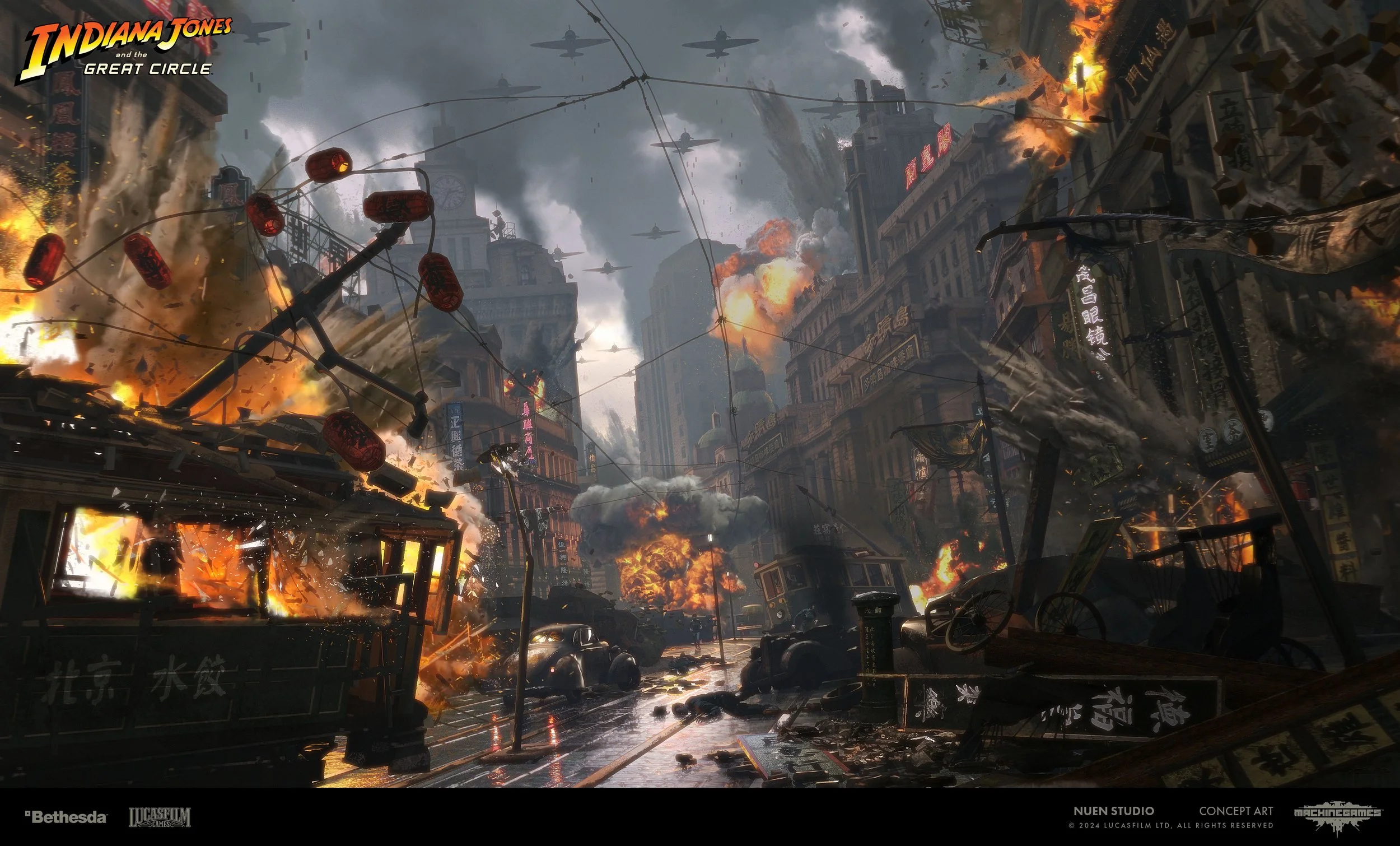
Shanghai’s destruction