
What NDA Work in AAA Game Dev Really Means
Why the Quietest Studios Are Often the Busiest.
If you've checked a concept art studio/artist portfolio and found nothing new in over a year, that's not necessarily a red flag. In AAA game development, the biggest projects are often the ones a studio can't talk about, and the absence of new case studies usually means a vendor is deep inside a long-term NDA, not that they've gone quiet for lack of work.
Two Projects, Nearly a Decade of Work, and Almost No One Knew Until Launch
For five years, Nuen Studio worked with MachineGames on environment concept art for Indiana Jones and the Great Circle, from 2020 until the game's release in 2025. For four of those years, in parallel, the studio was also deep in production on Marvel Rivals with NetEase, from 2021 to 2025.
Both projects ran almost the entire length of a console generation. Both sat under NDA for nearly all of that time. And if you'd looked at Nuen's public portfolio anywhere between 2020 and 2024, you would have seen very little movement: no new case studies, no fresh announcements, nothing that hinted at the scale of what was actually happening behind the scenes.
That's the part most people outside the industry get wrong about studios that look "quiet." A portfolio gap during those years didn't mean an activity gap. It meant the opposite: two of the most demanding AAA engagements Nuen has taken on, running concurrently, with nothing visible to show for it until the games themselves shipped.
This isn't unique to Nuen. It's how NDA-bound work functions across the entire AAA outsourcing industry, and it's worth understanding clearly, because it changes how a producer should actually evaluate a vendor's track record.
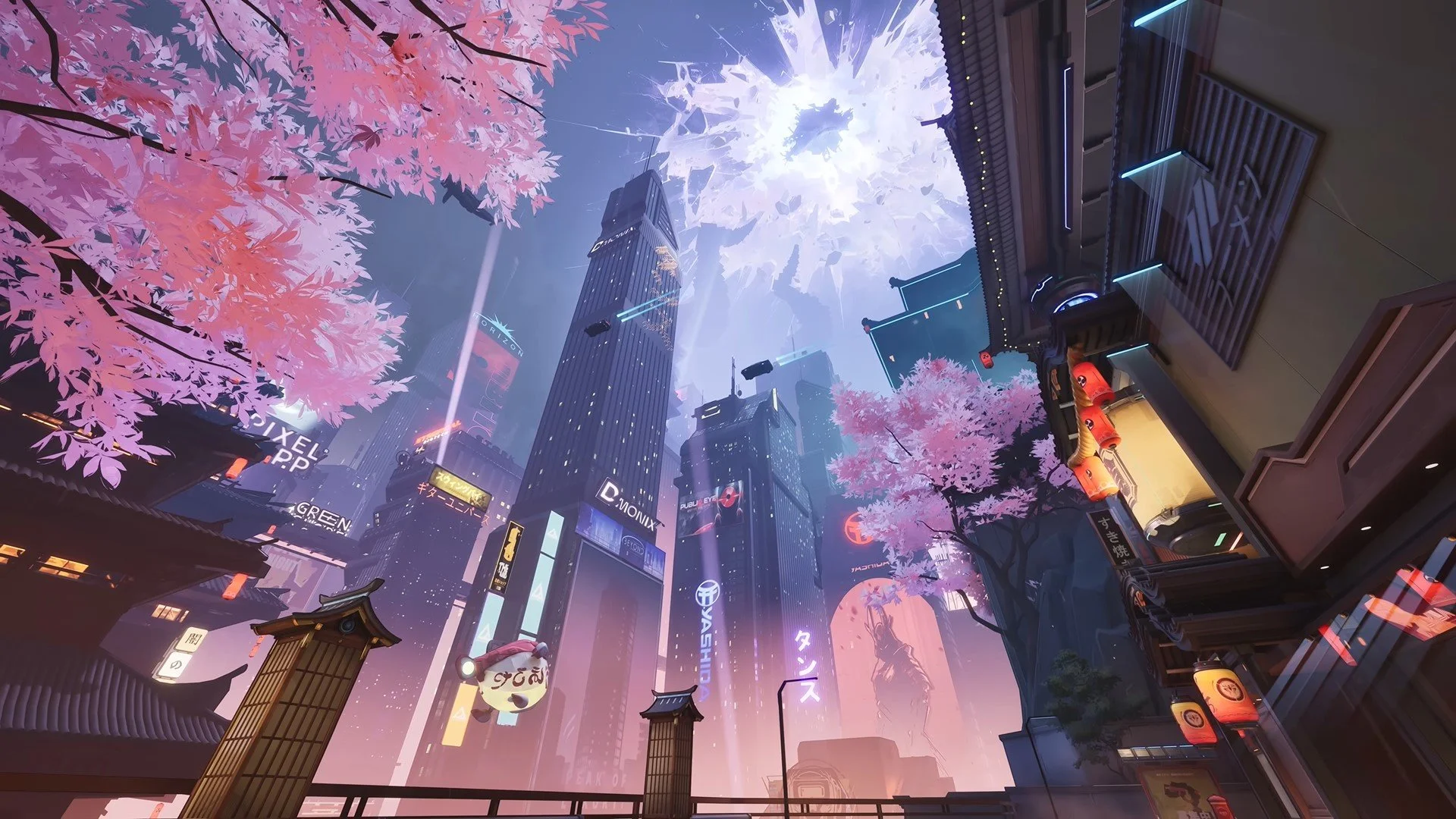
Marvel’s Rivals Tokyo map, one of many areas Nuen Studio team worked during the pre-production stage of the game.
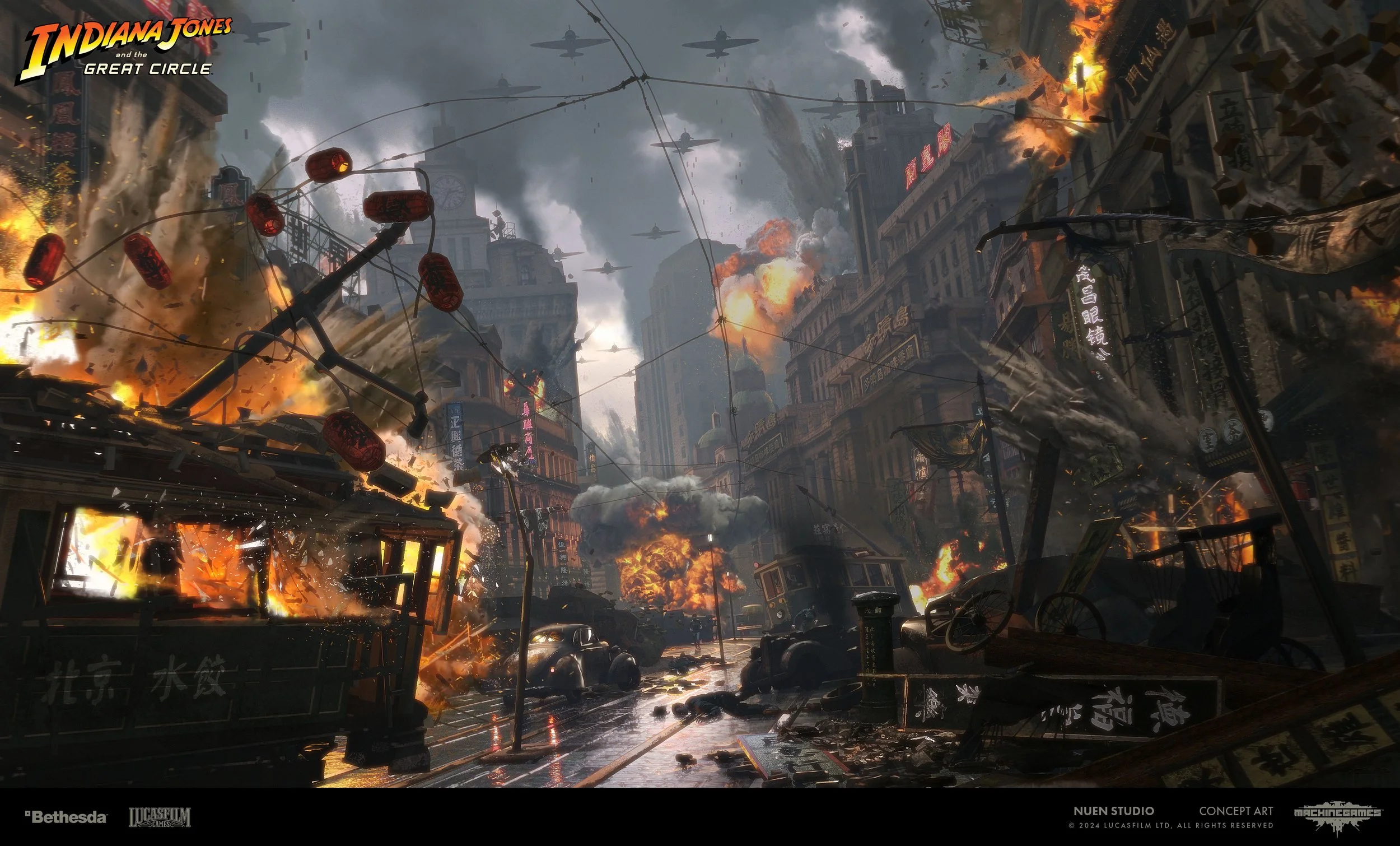
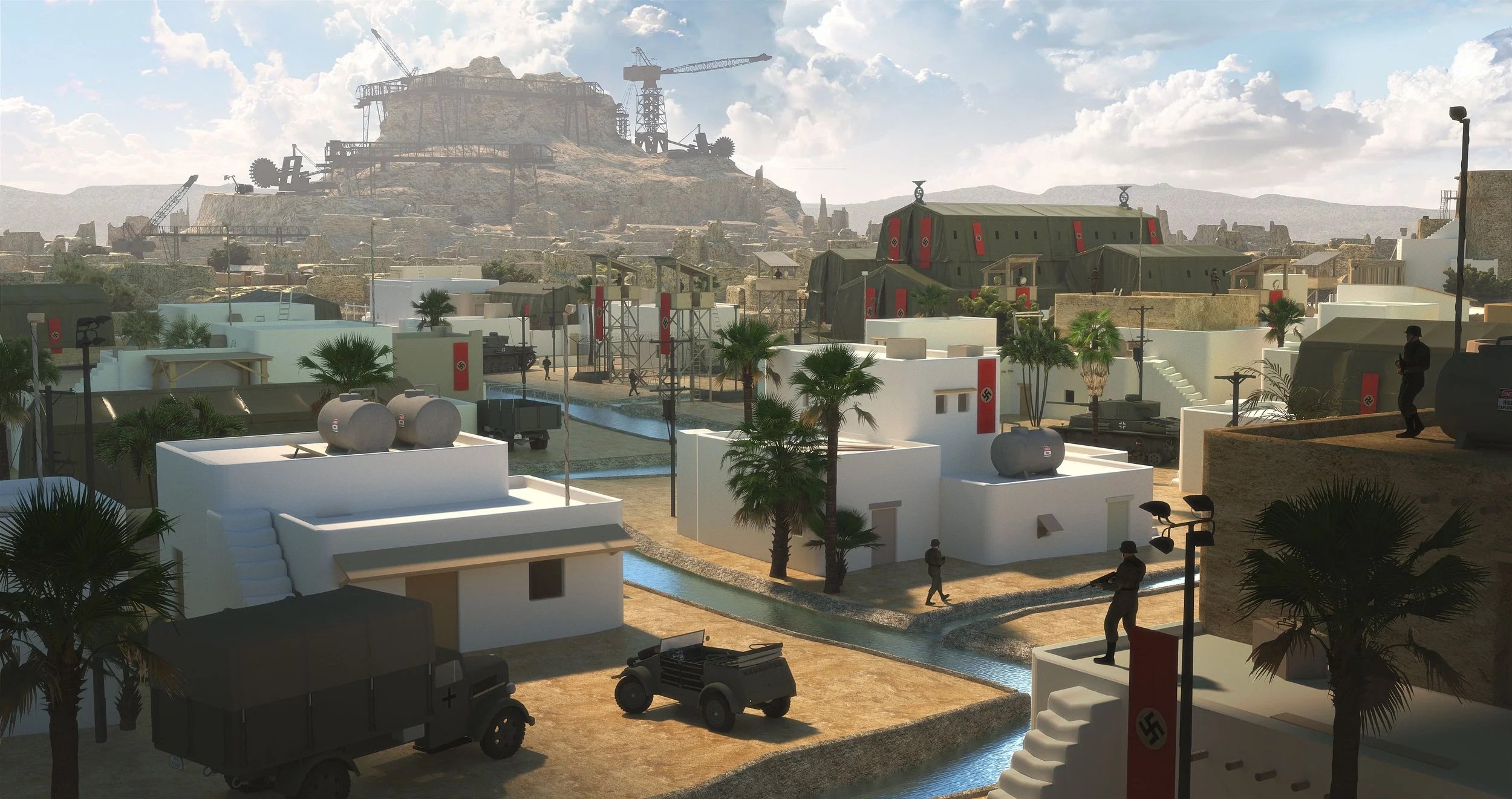
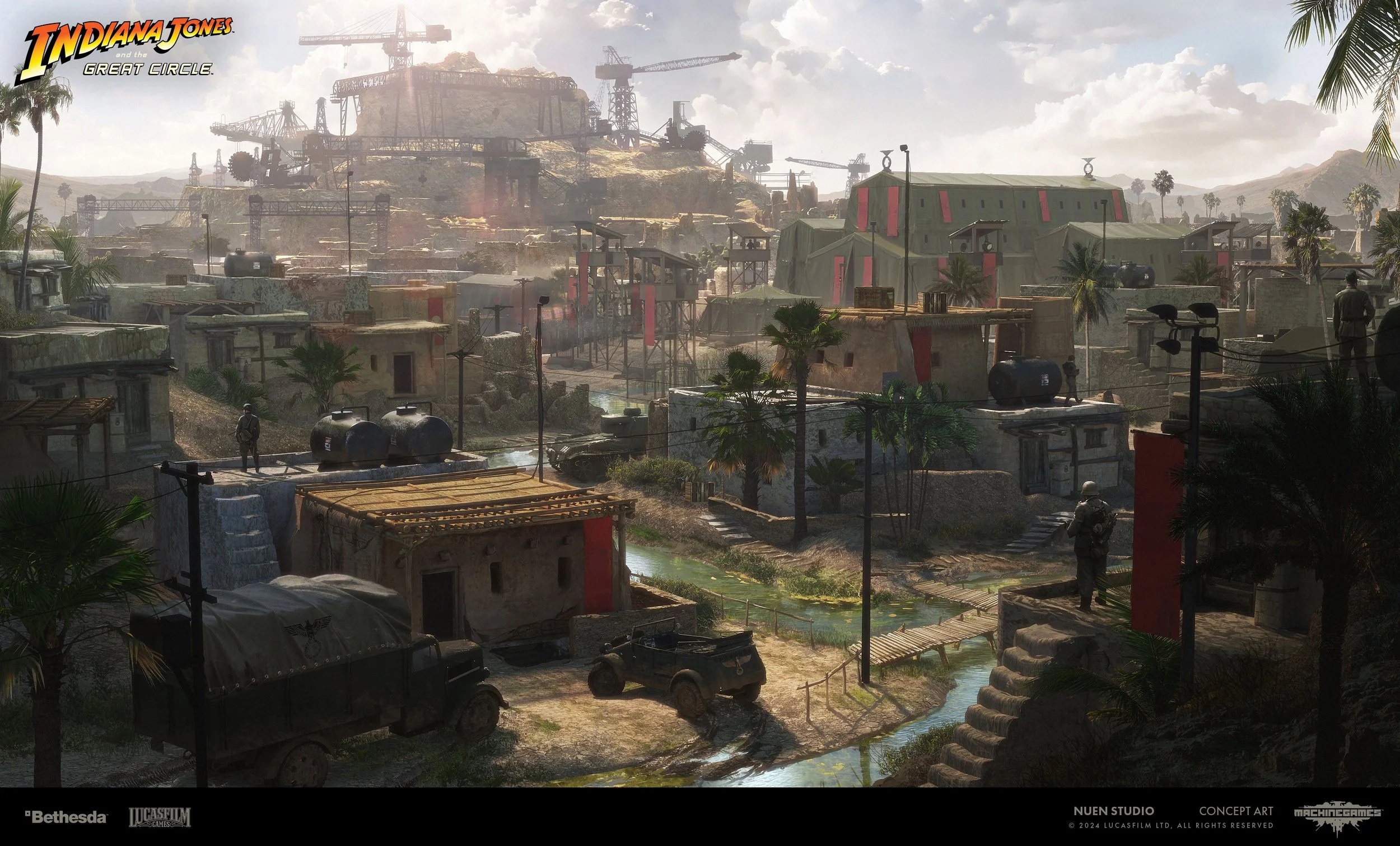
Nuen Studio’s Concept art for Shanghai’s bombing & destruction scene in Indiana Jones: The Great Circle.
What NDA Actually Protect, and Why Publishers Are Tightening Them
An NDA exists to protect a publisher's IP and marketing timeline, not to make a vendor look mysterious. The risk is concrete: concept art, character designs, or environment layouts that leak before a planned reveal can disrupt months of marketing spend and timing that a publisher has built an entire campaign around.
This risk has only grown more visible in recent years. The 2020 leak of The Last of Us Part II story content remains one of the most cited examples in the industry of how damaging a leak can be, not just to a single title's marketing, but to team morale and trust between studios and their external partners. More recently, the 2024 Game Freak breach exposed years of unreleased concept art and source material, a reminder that leaks aren't limited to outsourcing vendors; they can originate anywhere in a production pipeline. In response, some studios are even exploring AI-based tracing tools to identify the source of leaked material before it spreads further.
The practical effect on outsourcing is straightforward: NDAs have gotten stricter at every tier of vendor, not just at large studios. A vendor working on a major licensed IP, particularly one tied to a film property or a live-service title with ongoing content reveals, will typically have an NDA signed before any brief is shared, internal controls on how files are stored and circulated, and zero discretion over when something becomes public. That decision belongs to the publisher or IP holder, not the vendor.
How to Evaluate a Vendor When Most of Their Portfolio Is Invisible
If a producer can't lean on recent case studies to judge a vendor's current capability, what should they actually ask?
Start with process, not portfolio. Ask how the vendor handles feedback loops, what file formats they deliver (2D concept alone, or 2D paired with a 3D block-out), and what their average revision count looks like on a typical brief. These details tell you more about day-to-day reliability than any single piece of artwork.
Ask for older case studies that have been cleared for public use, even if they're not the vendor's most recent work. A studio that can show range across genres and project types, say, an animated series, a tabletop-to-digital adaptation, and a kaiju film tie-in, demonstrates versatility even while their newest, biggest engagement stays under wraps.
And if you need more direct verification before committing to a long engagement, consider a small paid trial. It's a fairer test than judging a vendor purely on what they're allowed to show you.
Respecting an NDA Isn't About Staying Quiet, It's About Waiting for Written Permission
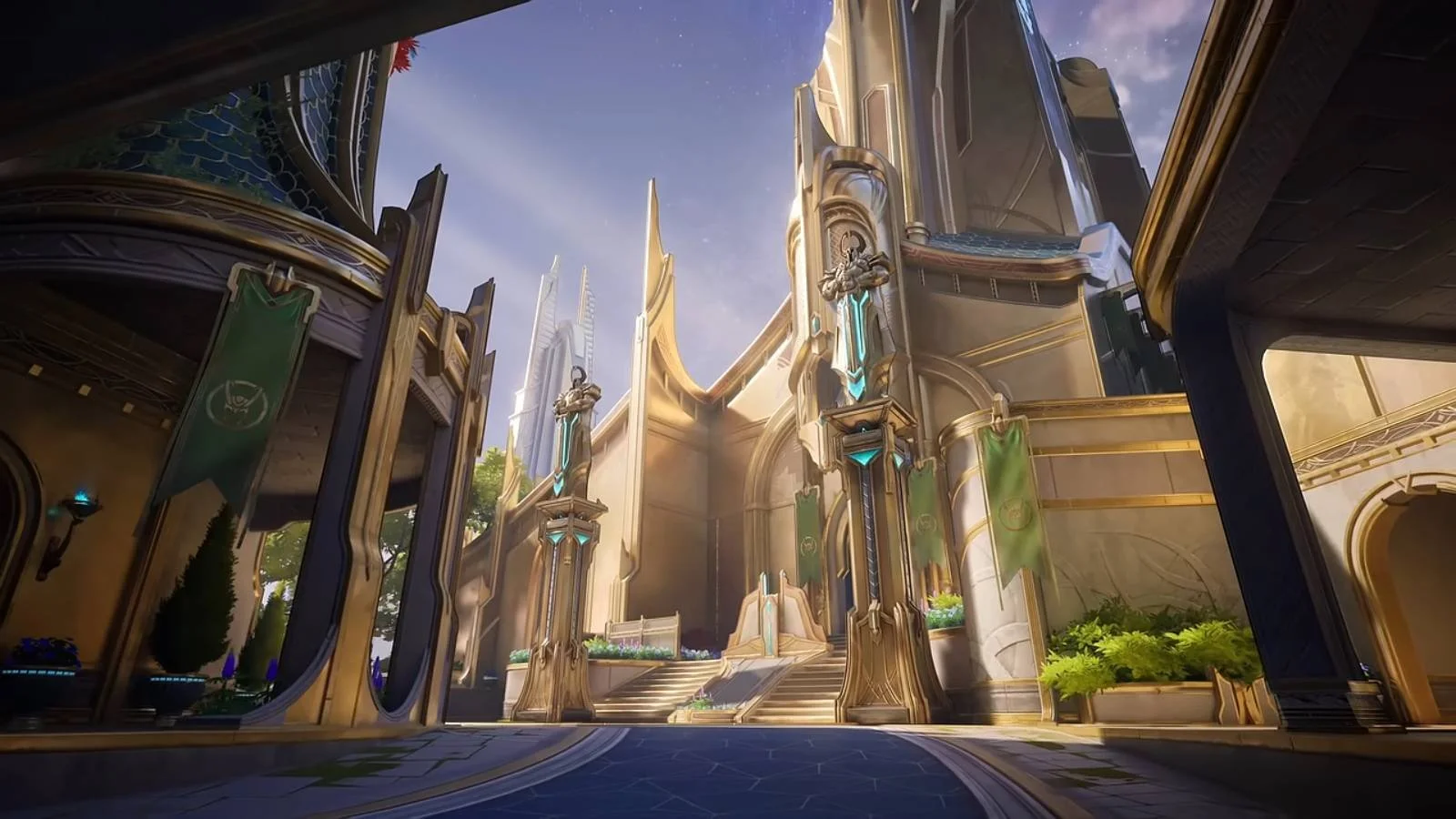
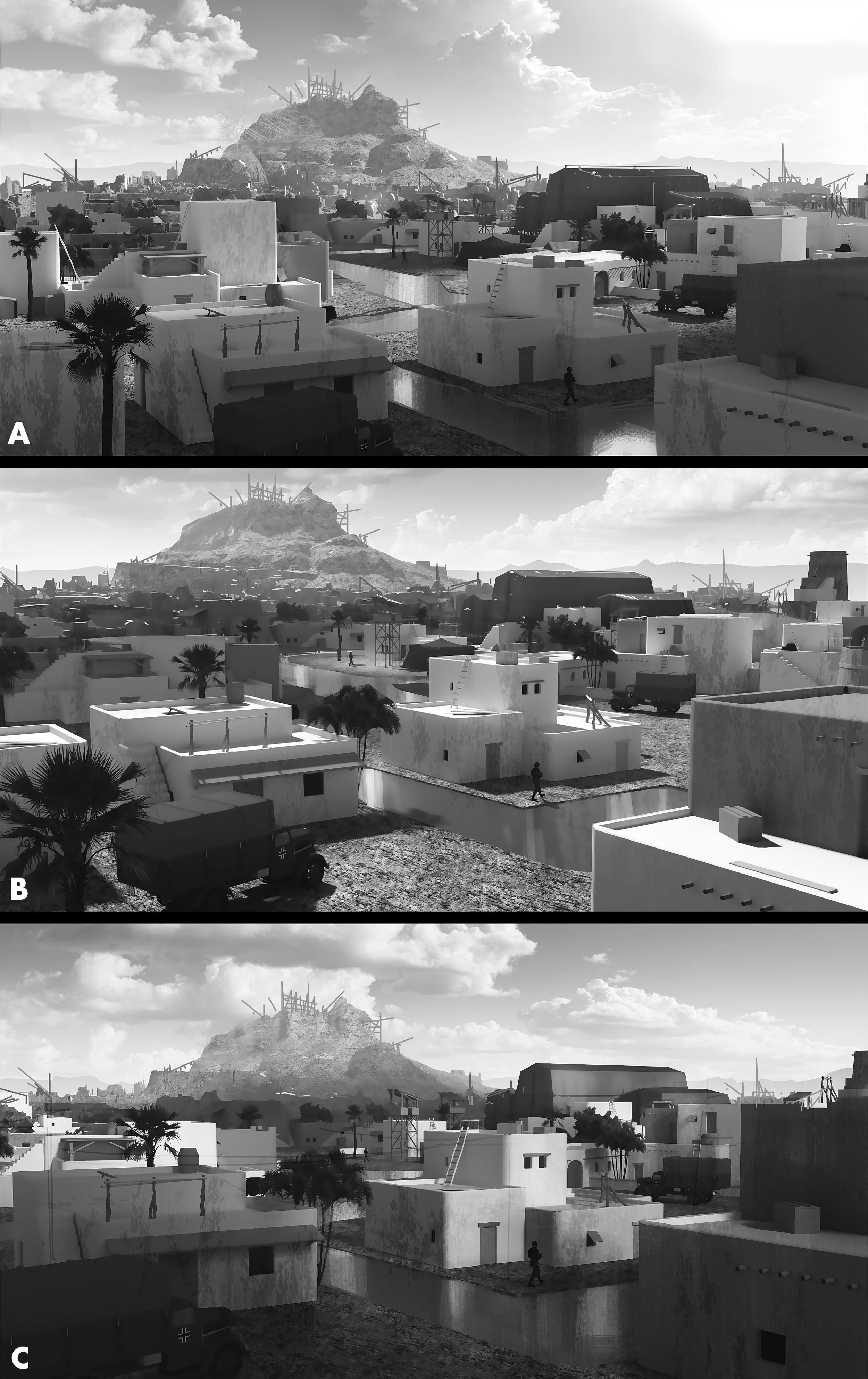
Yggsgard’s Environment art from the Netease team
There's an important distinction producers should make when sizing up a vendor: a studio staying quiet because their contract requires it is a completely different thing from a studio staying quiet because there's simply nothing happening.
The right operating principle is simple, and it's one any reputable vendor should hold itself to without exception: never assume a project is "probably fine to mention now," and never go public based on a guess about what a client would be okay with. Disclosure happens only after written permission from the client or IP holder, never before, regardless of how much time has passed or whether the game has already shipped.
Nuen held this exact line on Marvel Rivals for years after the project began, well after it had become one of NetEase's flagship live-service titles, and only began referencing it publicly once NetEase confirmed permission in writing. Not because the project had become "obviously safe" to mention, but because the client said yes, on the record.
This gives producers a concrete, useful question to ask when interviewing any vendor: "What's your process for deciding when a case study is cleared for public use?" A vendor who answers with some version of "we wait for written confirmation from the client" is telling you something real about how they'll handle your project's confidentiality too. A vendor who answers with "we use our judgment" is telling you something else.
The Real Signal to Look for in a Quiet Studio
“NUEN STUDIO’s concept art consistently exceeded expectations — visually stunning, narratively rich, and incredibly helpful across all departments. From strong initial sketches to final killer images, their work came out perfectly wonderful. As one Senior Level Designer put it: ‘I just wanted to thank whoever did it and say it was awesome.’ NUEN STUDIO’s art didn’t just support our production — it elevated it.”
None of this means every quiet vendor is automatically trustworthy, but it does mean that silence, on its own, isn't a warning sign. The signals worth actually paying attention to are different.
Look at whether a studio has kept its core artists in place over a long stretch. A team that holds together for four or five years on the same client relationship is usually a sign of a satisfied client renewing engagement, not a sign of a studio coasting. Look at whether they're transparent about the case studies they can show, and willing to explain, within the limits of what they're allowed to say, why a current project isn't one of them. And when permission to disclose finally arrives, watch how they handle it: promptly, accurately, and without overstating what they're now allowed to share.
That combination, patience under NDA paired with prompt and accurate disclosure once permission is granted, is a far more reliable indicator of how a vendor will handle your project's confidentiality than any portfolio update ever could be.
Looking to build your next world from the ground up?
Let’s collaborate: project@nuenstudio.com